
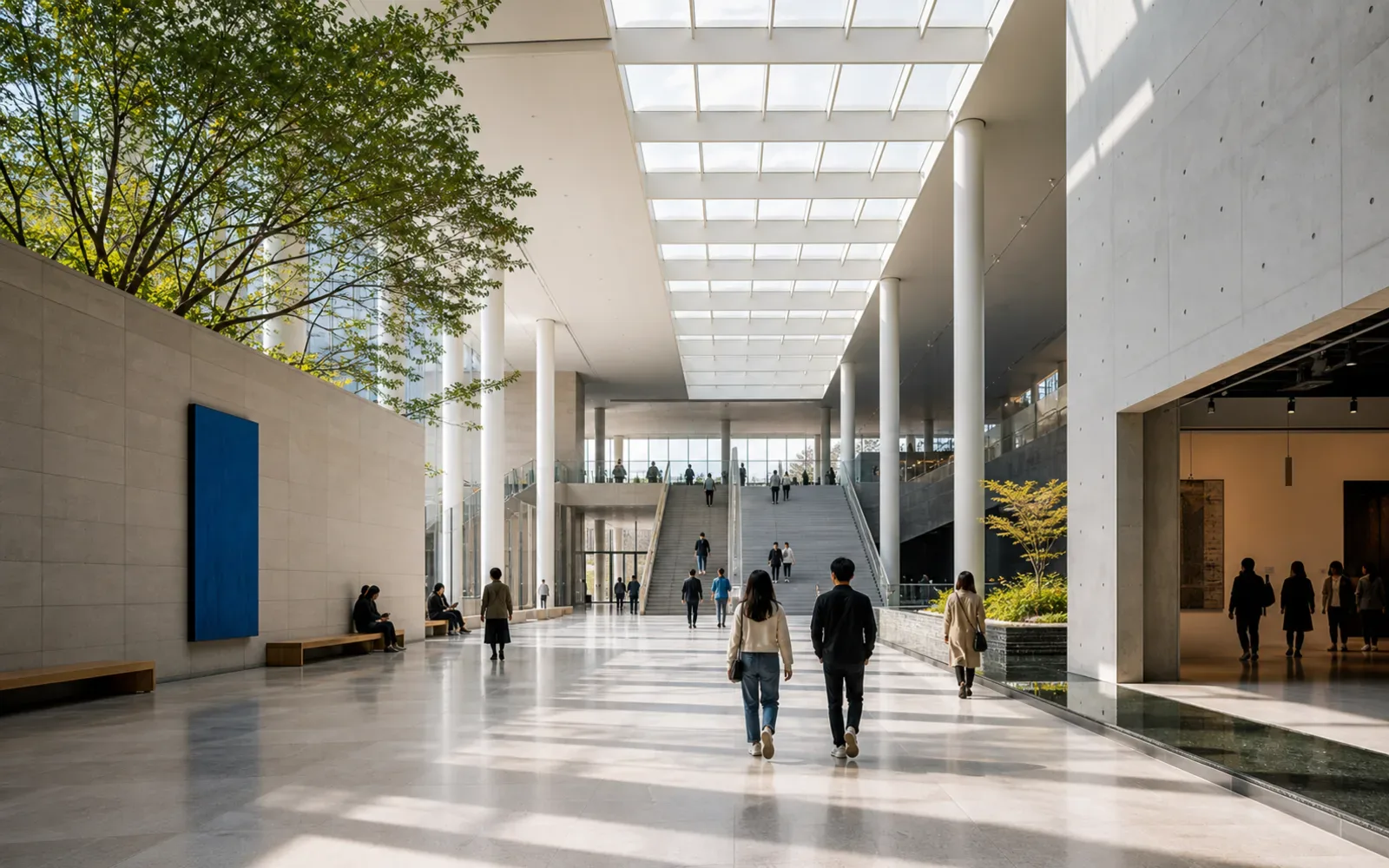
A free museum visit still needs a precise choice: free permanent galleries, free general admission with separately priced special shows, or an experience that costs nothing but requires a reservation. Choose the collection you want, then check the admission and opening conditions for that exact visit.
Start by checking the ticket boundary for the room you want. A free permanent collection, a free temporary exhibition with a timed entry, and a separately ticketed show are three different choices. If rain is the reason for the visit, use the station-to-museum rainy-day guide to choose the approach.
Pick the material before the zero-price ticket
| Venue | Useful focus | Suggested allocation | Check first |
|---|---|---|---|
| National Museum of Korea | Korean history and selected collection rooms | Two to three hours for a focused visit | Renovation closures and any separate exhibition ticket |
| Seoul Museum of History | The capital’s changing geography and everyday life | About 90 minutes to two hours | Closing day and the date’s late-opening notice |
| SeMA Seosomun | A current contemporary-art exhibition near City Hall | One to two hours | Show dates, installation closures and last admission |
| SeMA Seo-Seoul | An art visit within a southwest-Seoul route | One to two hours | Actual exhibition and the journey to Geumcheon |
A city-history museum and a contemporary-art show do different jobs. The better choice is the one that gives your day a purpose. Visiting several institutions solely because entry is free can spend the saving on unnecessary transport and leave little attention for the collections.
National Museum of Korea: separate permanent galleries from special exhibitions
Use the museum’s official visitor information to identify free permanent admission. Open the individual special-exhibition listing before paying or joining a ticket queue. Children’s Museum admission has its own reservation procedure; a free main-museum visit does not hold that separate slot.
Choose an open permanent gallery as a fallback before committing to a paid or timed show. Check the visitor notice for renovation closures rather than assuming all rooms in the same wing are open.
Seoul Museum of History: make later sightseeing more legible
At 55 Saemunan-ro, Jongno-gu, this museum offers free admission and a focused introduction to Seoul’s growth. Its English visitor page lists ordinary hours of 09:00–18:00, last entry at 17:30, and closures on Mondays and January 1. It separately lists Friday late opening until 22:00 and describes lockers and accessibility facilities.
The city’s autumn Culture Night announcement describes selected museum spaces opening until 21:00 on Tuesday, Wednesday, Friday, Saturday and Sunday from September 15 through November 30, 2026. Because that temporary program and the museum’s ordinary Friday page give different closing references, confirm the museum notice for your date before a late visit.
Choose one historical chapter and a model, map or everyday object that helps explain a neighborhood you will visit afterward. Around 90 minutes can work for that focused approach; two hours gives more room for reading. These are planning allowances rather than a claim about the time every visitor needs.
A central location makes a short nearby walk possible when weather suits, but another museum across Seoul is not a necessary second act. Carry one observation into the district outside instead of merely collecting another free admission.
SeMA Seosomun: begin with the exhibition calendar
The Main Branch is at 61 Deoksugung-gil, Jung-gu. Its visitor page lists free admission except selected special exhibitions, Tuesday–Thursday opening of 10:00–20:00 and Friday opening of 10:00–21:00. Weekend and public-holiday hours are seasonal. The branch closes on Mondays and January 1; last admission is one hour before closing.
Read the current show’s dates and gallery access. An institution can publish normal building hours while exhibitions are changing over. A particular special exhibition may also have its own admission conditions, so the word free on a general visitor page does not settle every ticket.
This is a useful art stop for a City Hall or Jeongdong day when the exhibition interests you. Choose one show and allow time to look, rather than assuming every room is available or using the building only as a weather shelter.
SeMA Seo-Seoul: make the southwest location part of the reason
Seo-Seoul Museum of Art is at 65 Siheung-daero 79-gil, Geumcheon-gu. The official branch page gives directions from Geumcheon-gu Office Station Exit 1 and lists free admission. Check any selected exhibition’s own conditions as well.
The branch publishes weekday and season-dependent weekend hours, Monday and January 1 closures, and last entry 30 minutes before closing. Use its current page for the particular day rather than borrowing Seosomun’s last-admission rule: the two branches do not state the same cutoff.
For a visitor based centrally, the journey needs a reason. It is more persuasive when accommodation or another appointment already brings you southwest and the actual exhibition fits your interests. Do not add a long detour simply to make a list of free institutions longer.
Separate admission from the rest of the day’s cost
Budget for the return journey, a meal and any storage your belongings require. The presence of visitor lockers does not establish that they fit large luggage or that every size is complimentary. Check the arrangement you need instead of assuming either a fee or a free suitcase space.
Read separate booking rules for children’s sessions, capacity-controlled programs and special exhibitions. Free main-gallery access does not secure those experiences. Keep the reservation confirmation and the admission price as separate records.
For a mixed-interest group, agree on one shared room or show, followed by an independent block and a clear meeting place. A companion interested in historical context need not spend exactly the same time as someone studying ceramics. Include seating, lifts and belongings collection in the final allowance.
Complete one useful visit before adding another
Save the venue name, address, selected exhibition and closing information before leaving. Choose one nearby meal or walking addition that supports the same district. If weather is the main constraint, the rainy-day routing guide adds exposed-transfer and forecast checks.
For temporary events beyond these collection visits, use the official-event search method. The city’s cultural-facility guidance is another starting point, while each venue’s current notice controls the actual visit.
Editorial method: Desk research from official museum and city pages, without a claimed personal visit or paid inclusion. The comparison separates general admission from a reserved program and an open building from an available gallery.