
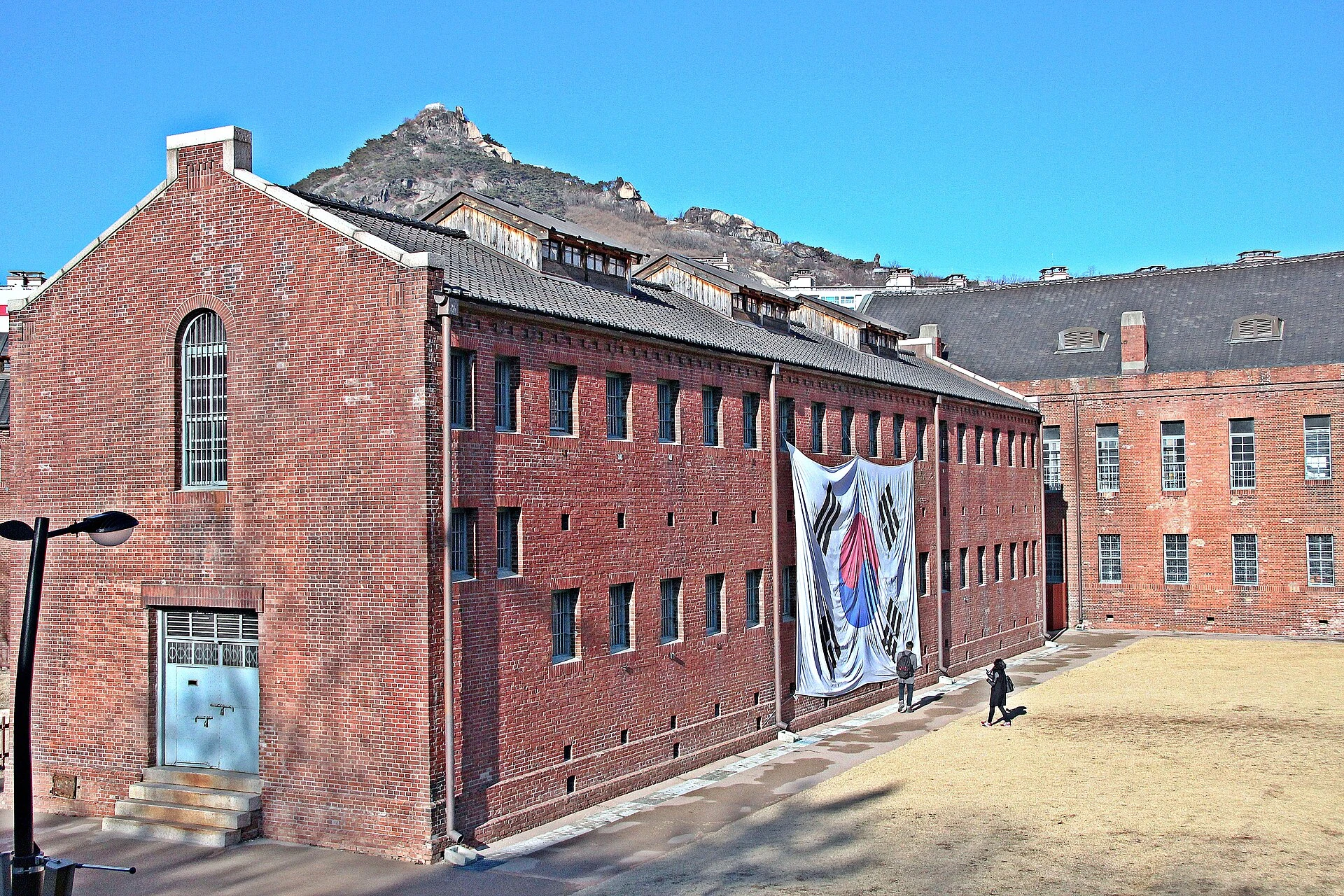
Seodaemun Prison History Hall is a place to learn about imprisonment, the independence movement and the use of confinement in Korea’s modern history. Its preserved buildings are evidence of that history, not a themed backdrop. Give the visit enough attention to read individual accounts and enough flexibility to step away from distressing material.
Plan the interior exhibition and outdoor spaces as one historical visit. The surrounding Independence Park can provide a pause afterward, but an outdoor walk is not a substitute for understanding why the prison buildings survive.
November brings an earlier closing time
The operator’s current homepage and KTO visitor record distinguish March–October, 09:30–18:00, from November–February, 09:30–17:00. Last entry is 30 minutes before closing. The operator posted its winter-hours notice on October 15, 2026, making the seasonal change particularly relevant to an autumn trip.
Monday is the regular closing day; when Monday is a public holiday, the closure moves to the following day according to the published rule. January 1, Seollal and Chuseok are listed closures. Check a holiday calendar against the operator’s actual notice rather than treating every Tuesday as automatically open.
| Visitor | Published charge | What to establish before entry |
|---|---|---|
| Adult, ages 19–64 | KRW 3,000 | Ordinary individual admission, separate from a paid program |
| Teenager, ages 13–18 | KRW 1,500 | Relevant age evidence if requested |
| Child, ages 7–12 | KRW 1,000 | Whether the content suits the individual child |
| Age 6 and under, or 65 and over | Free ordinary admission | The current documentation and category rules |
These categories follow the official Seoul tourism listing; the operator’s visitor and fee page controls exemptions and other categories. A child’s reduced ticket does not indicate that every exhibition is suitable for every child. Separately advertised education or evening programs can require a reservation and their own charge.
Start with the institution’s changing names
KTO records the prison’s opening on October 21, 1908 as Gyeongseong Prison and its renaming as Seodaemun Prison in 1912. The district’s historical account also follows its changing post-liberation names and the detention facility’s relocation in 1987. The history hall opened in 1998.
That chronology prevents a flattening of the site into one undifferentiated period. A label describing a colonial-era prisoner and one describing a later political detention can belong to the same physical complex but different political circumstances. Read the date as carefully as the photograph.
Liberation in 1945 did not end the building’s use as a place of confinement. The later institutional names and the 1987 relocation matter when reading post-liberation records. At the same time, do not assume that every person detained in a later period had the same legal or political circumstances. Let an individual’s label and documented account establish that context. For a family discussion, a useful question is how the purpose of the place changed when it became a history hall: which parts now preserve evidence, and which explain or commemorate it? That connects the surviving architecture with the decisions made when the site became a museum.
Before entering the cell buildings, identify the orientation display or map and follow the operator’s permanent-exhibition sequence. Choose one theme to carry through it: how prisoners were identified and controlled, how people resisted confinement, or how the surviving site became a place of remembrance.
Read records before confronting reconstructed scenes
Begin with documents, photographs and personal accounts in the exhibition. Ask who produced a record, for what purpose, and what the museum’s label adds. An administrative photograph is evidence made within a system of control; a later commemorative display has a different purpose. Both can be informative without being interchangeable.
When a display represents an individual, retain the person’s name and the event or activity described. One specific account gives more meaning to a later cell corridor than a general impression that many people suffered. Avoid turning a brief visit into a catalogue of punishments.
Some spaces interpret interrogation, torture and execution. A reconstruction may explain a historical practice while also being emotionally intense. Visitors can read the introduction, decide whether to enter, and rejoin the group afterward. Stepping aside is a valid response; it does not diminish the seriousness of the visit.
In the cell blocks, look at the arrangement of power
KTO notes that seven buildings were preserved for historical significance, including three prison buildings and the execution site among the designated historic remains. Rather than treating every surviving surface as identical evidence, use the labels to establish the role and history of the particular building you enter.
In a corridor, observe what can be seen from the central circulation space, where doors and small openings sit, and how the layout separates people. These are architectural questions you can investigate from the permitted route. They help explain the institution without inventing a prisoner’s experience or assuming that a reconstructed room retains every original detail.
Keep pathways clear and avoid entering a small space simply because another visitor has posed there. If a room is being used by a guided group, wait at a considerate distance or continue to another permitted section. The object of the visit is understanding, not reproducing a photograph at any cost.
Plan the most sensitive areas as a choice
Tell companions in advance that the route can include difficult material. For a family, decide how adults will support a child who wants to leave a display. One adult can continue with the child toward a less intense area while another finishes reading; forcing everyone through every room is unnecessary.
At a commemorative or execution-related place, lower voices and avoid playful poses. Ask before photographing identifiable visitors, especially someone reflecting privately. Follow the site’s photography instructions rather than assuming all historical exhibitions allow the same use of a camera.
A purposeful shorter visit can include orientation, one group of personal accounts and one preserved prison section. A longer visit can add more of the site’s interpretation and outdoor layout. These are editorial choices, not measured durations or a claim that the shortest route is step-free.
Get to the right entrance and preserve the return
The current visitor address is 251 Tongil-ro, Seodaemun-gu. Visit Seoul identifies Dongnimmun Station Exit 5 on Line 3 as the ordinary approach. Use the operator’s directions for the entrance and check the elevator route independently when required. A nearby station does not resolve every crossing, slope or historic-building threshold.
The operator’s interpretation page describes free booked docent guidance in Korean, English, Chinese and Japanese for groups of up to 20. Reservations open 14 days before the intended visit, first come first served; the page excludes children aged 10 and under from that docent arrangement. That is a condition of the guided service, not a ban on those children entering the museum. Confirm the selected language and accepted booking before designing the visit around commentary.
The same page distinguishes a paid augmented-reality guide app whose quoted charge includes museum entry. Do not buy ordinary admission again automatically if you choose a combined app-and-entry product; establish what your actual purchase contains. If you prefer an independent visit, keep the ordinary ticket and the optional guide resource as separate choices. A self-guided route with prepared background remains a sound plan when a tour cannot be confirmed.
Allow the ending to remain quiet. Take a pause in the permitted surrounding park area, have a meal, and leave room to discuss what you read. The Seoul walking-tour guide explains how a booked interpretation differs from arriving independently. For general museum alternatives on another day, use the free-museum comparison rather than adding another demanding history visit immediately afterward.