
An ordinary KTX booking should end with a ticket you can retrieve, not merely a successful bank notification. The useful sequence is to choose the right stations, select the actual train and seat, complete payment, then verify the ticket and cancellation route while you still have a reliable connection.
This guide concerns point-to-point tickets, not a KORAIL Pass. It follows the official English Ticketing Guide rendered on October 17, 2026. It describes the process without making a reservation, testing a payment card or claiming that a particular future departure is available.
Use the current official channel
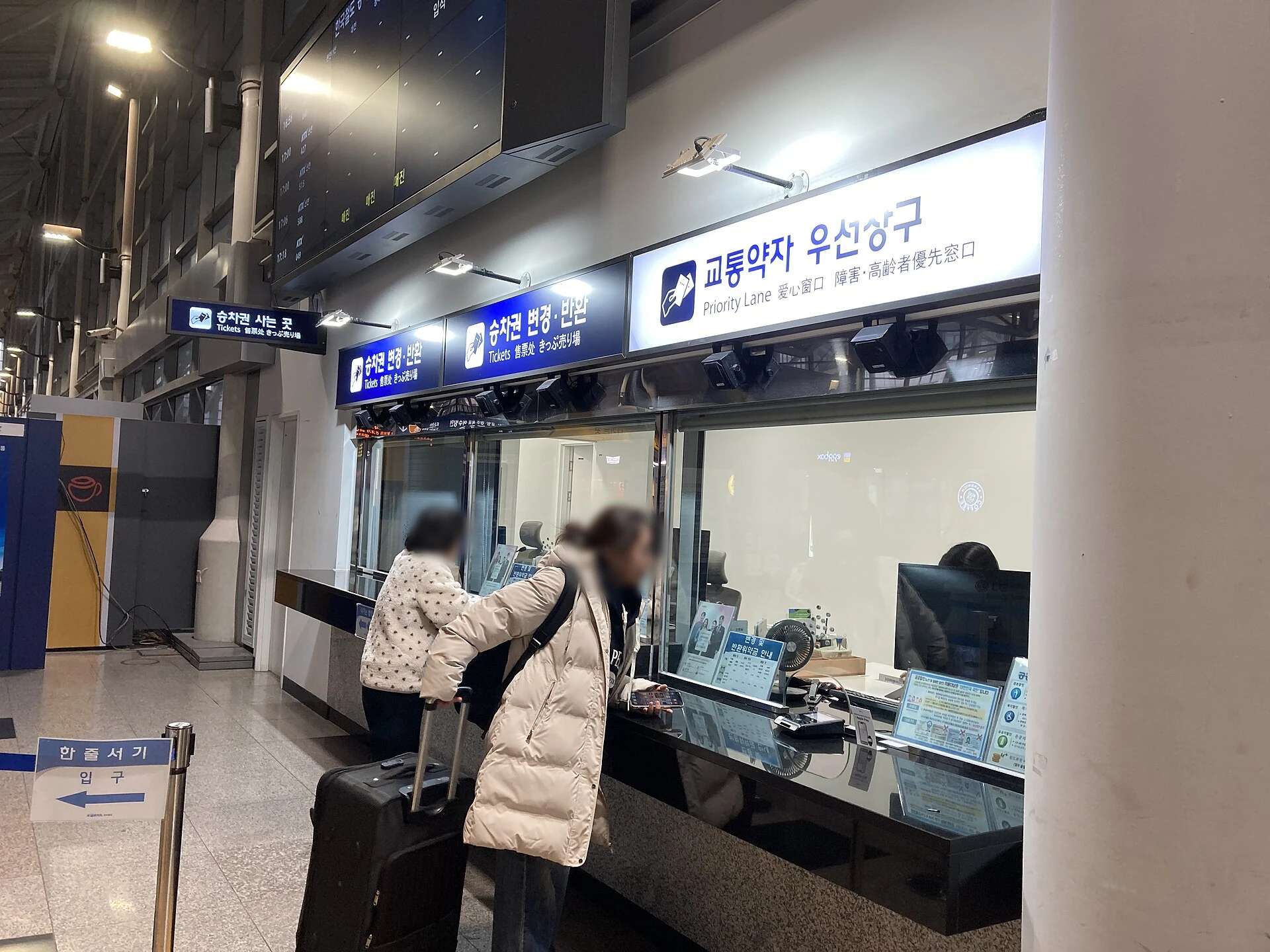
Start at KORAIL’s official English website and open Passenger Guide → Ticketing Guide when checking the conditions. The guide names the KORAIL website, KORAIL+ mobile app, ticket machines and railway stations as purchase channels. It specifically distinguishes railway station ticketing from subway stations.
The current ordinary-ticket guide says sales open at 07:00 two months before the desired departure date. It states that the website and station counter sell until departure, while machines sell until 10 minutes before departure. These are channel limits, not sensible arrival targets: you still need time to obtain the ticket, locate the platform and board.
Holiday sales or a specific disruption can have a separate notice. If a future date is not open in the booking calendar, check the current sales notice instead of assuming the train is sold out or using an old one-month rule found elsewhere.
Resolve the station pair before selecting a cheap departure
Enter the intended departure and arrival stations, then compare the result with your actual accommodation and destination. Seoul Station, Yongsan and other departure points are not interchangeable. A cheaper or earlier departure is not useful if reaching its station creates an impractical transfer.
| Field | Question |
|---|---|
| Departure station | Is this the railway station and entrance you can reach with your luggage? |
| Arrival station | Does this stop serve the actual destination rather than a similarly named city location? |
| Date and time | Is the journey on the intended Korean local date, including an early or late departure? |
| Train and number | Is it the service shown on the ticket, not another train leaving nearby? |
| Seat category | Have you selected the seat or accommodation you actually intend to use? |
| Passenger details | Are names and required passenger information entered as instructed? |
Do not identify a train solely by its destination. Several services can head toward the same city with different stops and journey times. Keep the train number with the departure time in your travel record.
Choose the seat arrangement with the party in mind
Check the displayed seat map and the selected service’s accommodation options. A seat reservation is not the same thing as an unreserved or standing entitlement. If only a different category remains, read its meaning before buying it as though it guarantees the same seat.
For a group, verify the seat numbers after selection and again on the final confirmation. A booking for several people does not justify assuming that every seat is together. Consider luggage, movement needs and any child requirements while a suitable arrangement is still available.
A route involving a transfer needs attention to both trains. Inspect the interchange station and the time between services. A connection displayed by the system should still be considered alongside the practical needs of the people traveling; a very short interchange may be stressful with bags or a stroller.
Payment and ticket retrieval are separate checks
The official guide says tickets can be paid for by credit card. It does not establish in the text used here that every overseas-issued card or authentication method will work. Read the current checkout instructions and service notices for your card rather than relying on a blanket promise of foreign-card acceptance.
If a payment attempt fails, first determine whether a ticket was actually created. Repeatedly paying without checking the ticket record can make a confusing authorization problem harder to resolve. Your card issuer and KORAIL may need different transaction details.
The guide says ticket retrieval uses the email address and password entered at purchase, including upper- and lowercase letters. Record these accurately in a private place. This is a booking-retrieval credential, not something to publish in a travel screenshot or send to a stranger offering ticket help.
- Complete the selected official purchase process.
- Open MY TICKET and retrieve the booking using the required information.
- Compare station pair, date, train, time, passenger count and seat details with your plan.
- Save the usable ticket or confirmation in the form the channel provides.
- Keep the cancellation route accessible until the journey is completed.
An email saying that a payment was processed is not a substitute for checking the actual ticket. Confirm that the document or mobile view is the one intended for boarding and inspection.
Plan the station arrival around the ticket
Look up the railway station rather than a nearby metro stop alone. Interconnected stations can still require a walk between the subway platform and the railway concourse. Identify the appropriate hall and departure display before following the platform number.
Compare the board with the exact train number and departure time. A platform assignment is a final operational detail that can change, so do not treat a screenshot taken earlier as the last word. Keep the ticket available for staff and check the carriage and seat as you board.
Pack so that the ticket and essential documents are accessible without unloading your suitcase in a doorway. Store luggage using the train’s appropriate facilities and keep aisles and exits clear. This guide does not promise a particular storage space will be free on the service you choose.
Change the plan before the deadline becomes a different problem
The current guide allows website refund requests through MY TICKET before the train’s departure, and describes KORAIL+ cancellation for mobile tickets. After the departure time, it directs refund requests to a railway station counter. It says a refund cannot be requested after the arrival time shown on the ticket.
A penalty can apply depending on when the refund is requested, with different provisions for weekends, public holidays and specified periods. Check the applicable current table and the cancellation quote before confirming. This guide does not flatten a multi-column refund table into one percentage that would be wrong for another day or time.
If you decide to take another train, verify what happens to the original booking and its charge. Buying a new ticket does not automatically cancel the old one. Retain the cancellation confirmation and allow for the issuer’s refund processing; this article does not promise an immediate return to every foreign card.
Before a flexible booking, record the latest arrival that still makes the day worthwhile. That gives you a practical basis for deciding whether another train is useful if the first plan changes, rather than paying for any remaining departure simply because a seat is available.
Keep ordinary tickets separate from a rail pass
A point-to-point ticket purchases the selected journey under its ticket conditions. A rail pass has eligibility, valid-day and seat-reservation rules of its own. Do not enter a pass-related reservation flow when your goal is simply to buy one ordinary KTX ticket.
For a shorter excursion where a high-speed booking may be unnecessary, compare the Suwon, Incheon and Chuncheon day-trip options. For the payment backup needed before any transport purchase, review paying in Korea. The right ticket begins with the journey you actually intend to make.