
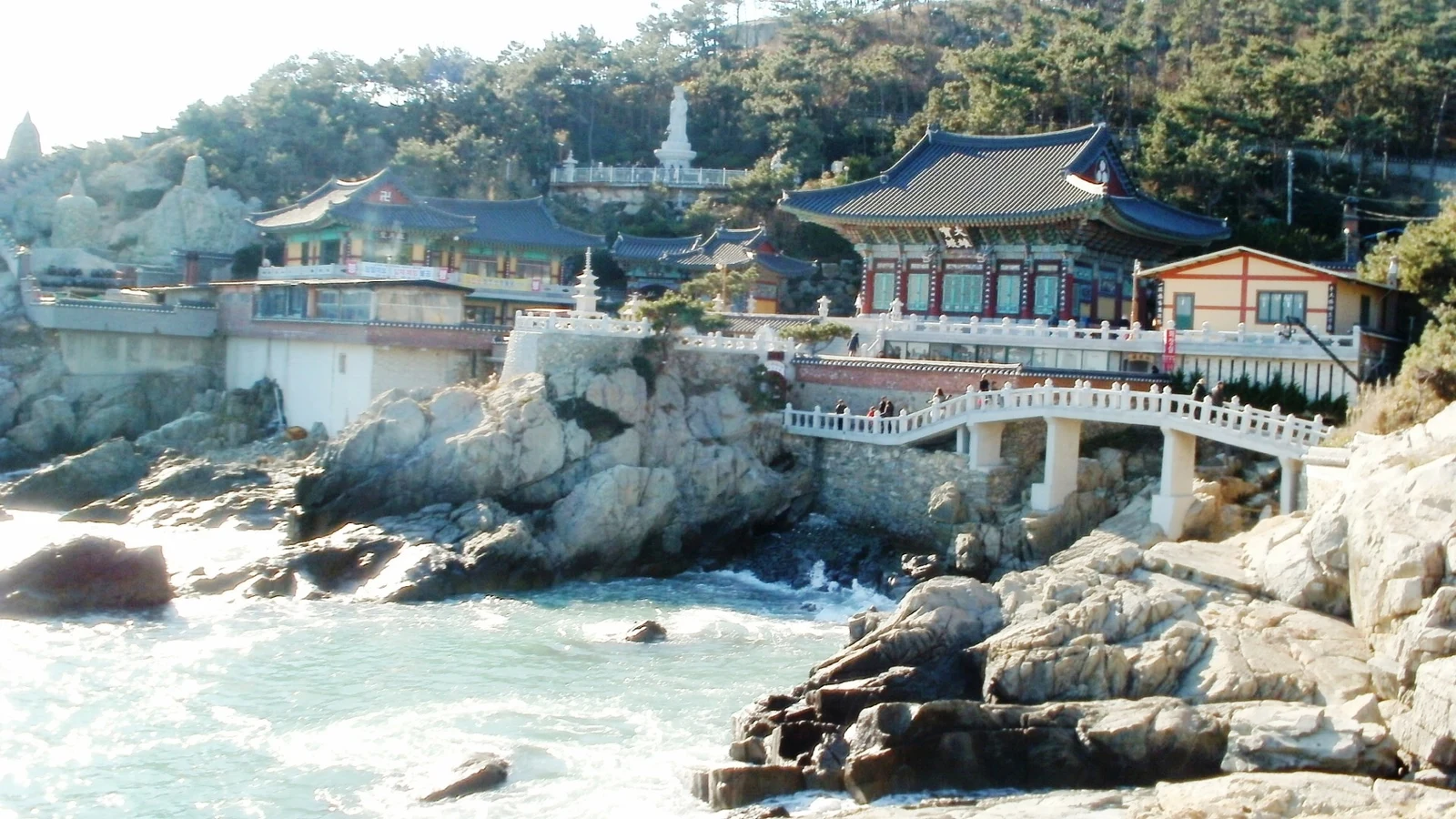
Haedong Yonggungsa works best as a temple visit with a coastal view, rather than a quick photo stop between distant Busan neighborhoods. Start with a route to its land-side entrance, decide how far to descend, then keep enough time and energy for the climb back. If your party includes someone who cannot manage stairs, make the access question part of the decision before leaving the hotel.
Start at the temple entrance, not at the shoreline pin
Search for 해동용궁사 in a Korean map app. The VISITKOREA temple record places the site in Gijang, on the coastal side of eastern Busan. Check where your selected bus stops or where a taxi can leave you on the approach. A pin inside the grounds is useful once you are walking, but an approach on a map is not automatically a pedestrian entrance.
A trip from central Busan uses more of the day than the temple visit alone. If you are already staying around Haeundae or Songjeong, compare the surface route directly from your hotel with a route that sends you first to a railway station. Ask whether the transfer saves anything once you include a stop walk and the time between services. Carry the Korean destination name so you can show it to a driver.
| Plan | What to do | What changes it |
|---|---|---|
| Temple and coast | Enter from land, descend only the public route, return up the same way | Wet steps, dense groups or limited confidence on stairs |
| View with a shorter walk | See the entrance area and assess the descent before committing | The best-known lower viewpoints still involve stairs |
| East Busan half-day | Pair the temple with one Songjeong or east-coast stop | A late start, poor weather or a long cross-city return |
Decide how far down you actually want to go
The seaward view appears because the temple occupies a steep coastal setting. A stepped route is a different commitment from walking into a level urban temple. Plan for the return ascent as well as the descent. A travel companion who can go down slowly might find a crowded climb more difficult, especially if there is no comfortable place to stop together.
Keep the itinerary honest if someone needs step-free access. Look up the approach and ask the site about the route you intend to use. Avoid promising that a car drop-off eliminates the steps to the lower temple. Agree on a visible meeting point near the entrance before splitting up, and keep the group together if rain makes the access uncertain.
Make time for the temple before taking photographs
Use public paths and follow signs or staff guidance around worship spaces. Step aside to let people pass before stopping for a picture. A busy stair landing is a poor place to change lenses, rearrange bags or ask the whole party to stand together. The view can wait until you find a wider space or return up the route.
The coastline is part of the attraction, but it does not make stone ledges or restricted areas public viewpoints. Keep a zoom option ready for details you cannot reach from the path. If a worship hall is in use, photograph the exterior or move on. A shorter visit organized around the public approach still makes sense even if the closest waterside angle is unavailable.
Build one East Busan half-day
An example from a Haeundae base is to check the outbound route after breakfast, visit the temple while there is good light, and use Songjeong for a meal or a short shore walk. Treat any other coastal stop as an alternative, rather than a second commitment. The order here is an editorial example, without a measured travel time or an implied connection between every stop.
If you also want the Haeundae coastal railway, choose the boarding station and booked direction before deciding whether to combine both visits. A capsule booking changes the order of the day. If your train departs from Songjeong separately from the temple, leave a real buffer for the road leg rather than planning to arrive just before boarding.
From the outer approach to the viewing route
A first visit can be organized around three deliberate stops: the public upper approach, one wider coastal viewpoint, and one temple courtyard. Read the route board when entering, then keep the narrow stairway for moving rather than for photographs. If two people have different plans, agree to meet at the same land-side landmark. A car pickup at the edge of the outer approach is a separate map point. Do not ask a driver to collect you from the low temple courtyard. This short route leaves space to pause below without turning one tricky corner or staircase into a deadline.
Save the return before going down
Screenshot the return boarding point and save the bus or taxi pickup as its own place. If darkness, strong wind or heavy rain changes conditions, keep the alternatives simple. Turn back on the public temple approach, get to an area where you can wait comfortably, then choose a bus or confirmed pickup. A different east Busan stop is only an improvement if it is easier to reach and still open.
Local search terms: 해동용궁사 (Haedong Yonggungsa), 송정해수욕장 (Songjeong Beach).
Editorial method: Desk research from the official sources linked above, checked November 23, 2026. Itinerary examples are planning suggestions.