Ordering coffee in Korea is usually a sequence of small choices: drink, temperature, size, any accepted modification, and whether you will sit inside or take it away. Say those choices in that order. It gives the staff a clear order and reduces the chance that a correct drink arrives in a format you did not intend.
Language and operator references checked October 17, 2026. The examples below are counter-ordering tools. Menus, payment methods, seating rules and cup-return systems differ between businesses and branches. This is not a taste-tested cafe ranking or a claim that every menu accepts the same customization.
A complete order in one sentence
아이스 아메리카노 한 잔 주세요. 매장에서 마실게요. means “One iced Americano, please. I’ll drink it here.” To take it away, replace the second sentence with 포장해 주세요., “To go, please.” Say the drink’s exact menu name if it differs from the familiar example.
You can show the sentence on your phone, then point to the size you want on the menu. If the staff ask a follow-up question, resolve that item before adding several more drinks. A short, complete instruction is easier to confirm than a long translated paragraph containing unrelated preferences.
Decode the choices on the menu
| Korean wording | Meaning | Important distinction |
|---|---|---|
| 아이스 / 따뜻한 | Iced / hot | Confirm that the particular drink has both versions |
| 한 잔 / 두 잔 | One cup / two cups | Quantity is separate from size |
| 매장 / 포장 | For here / takeaway | This can affect the cup and service sequence |
| 디카페인 | Decaffeinated | Availability and the product’s stated caffeine information still matter |
| 시럽 / 샷 추가 | Syrup / an added espresso shot | Check whether the change is possible and whether it costs extra |
| 우유 / 두유 | Milk / soy drink | A substitution does not establish an allergen-free preparation area |
Size names belong to the business. A small independent cafe may offer one size; a chain may use named sizes and different hot/iced options. Choose from the actual menu rather than assuming a word such as “regular” maps to the same volume everywhere.
Know what the drink name does and does not tell you
An Americano is a different order from a cafe latte. As a concrete operator example, Starbucks Korea’s Blonde Caffè Latte description identifies espresso with steamed milk and milk foam. The chain’s current drink menu separates coffee, blended drinks, teas and other categories. It is a useful example of why the complete product name matters, not a recommendation to use that chain.
“Latte” in a flavored or tea-based product name does not necessarily mean the same recipe as a cafe latte. Ask about coffee, milk, sweetening and the chosen size when those matter. Do not assume the photograph reveals all ingredients or that a color tells you whether the drink contains caffeine.
For an allergy or strict dietary requirement, ask about the complete drink and shared equipment. A requested milk substitution changes an ingredient only if the cafe accepts it; it does not certify the blender, pitcher, topping or preparation area. The MFDS labeling guidance helps explain packaged ingredient and allergen information, but an unpackaged cafe drink still needs an answer from the business.
At the counter: finish the order before choosing the seat
First find the ordering point. Some shops have a staffed counter; others use a kiosk or a table system. Read any instruction about seating before ordering. If the room is crowded, ask whether you should secure a table first rather than leaving bags on a seat that staff have reserved for another party.
For two people, state both drinks with their temperatures and quantities. If one person wants a modification, attach it to that drink rather than the entire order. Before paying, check the visible total and the number of items. Pastries, bottled drinks and an extra espresso shot may be separate charges.
Ask 주문은 여기서 하나요?, “Do I order here?” if the counter arrangement is unclear. After ordering, 어디에서 받으면 되나요? means “Where should I pick it up?” These two questions settle more than trying to infer a procedure from the design of the room.
Using a kiosk without losing a modification
- Select a language if offered, then identify the correct drink category.
- Choose the exact product, temperature and size.
- Review the option screen before adding it to the cart. A skipped screen may preserve a default you did not intend.
- Add only the items and changes you can confirm. Check the cart quantity and final total.
- Complete the accepted payment method and retain the order number or receipt.
- If the kiosk cannot express a necessary ingredient requirement, ask staff before paying rather than typing the requirement into an unrelated field.
A touchscreen being available does not mean every foreign card or mobile wallet is accepted. If payment fails, establish whether an order was actually placed before repeating it. The visitor payment guide explains why a pending bank notification and a completed merchant sale are different records.
Pickup: match the drink, not just the cup color
Wait clear of the pickup route and listen for the order number, name or pager signal the business uses. Check the temperature and item count when the order arrives. Two similar cups may belong to different customers or contain different milk choices.
If a drink appears wrong, show the receipt and ask 이게 제가 주문한 음료인가요?, “Is this the drink I ordered?” Keep the question tied to the specific item. Do not taste a drink you suspect contains an ingredient you must avoid simply to investigate it.
For a takeaway order, check that the lid is secure before leaving and keep hot drinks upright. A takeaway cup is still hot liquid; carrying it alongside a suitcase, phone and open map can make the next few minutes awkward. Finish arranging your belongings before joining a busy pavement.
When sitting inside: ask about the use you need
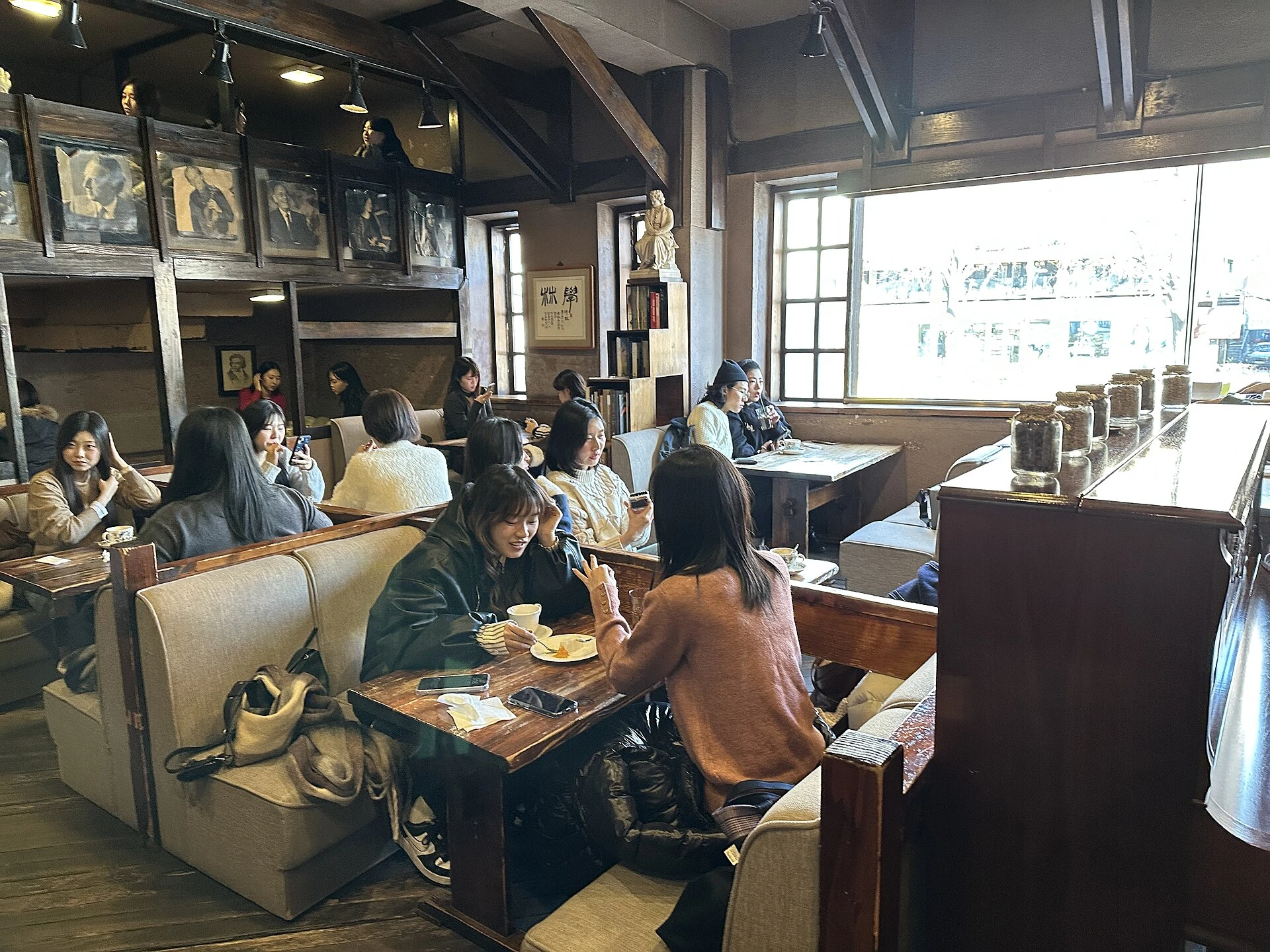
A seat, a power outlet and permission for a long laptop session are separate questions. Check any posted time, laptop or per-person purchase conditions. Ask about the actual table if working is the purpose; a district’s reputation for relaxed cafes does not establish that a particular shop is a workspace.
For a group, read the menu and seating policy before dividing one small purchase across several occupied seats. A staff member may direct you to another table or explain a purchase requirement. If the arrangement does not fit the visit, choose another business rather than treating the cafe as a free public lounge.
Returning cups and trays
Look for 반납, “return,” or a clearly designated tray-return area. Follow the shop’s system; some businesses ask customers to return items, while others collect them. Do not place used cups among clean pickup cups because both counters look similar.
Ask 컵은 어디에 반납하나요?, “Where do I return the cup?” Empty leftovers only where the business directs. If you received a pager or reusable vessel with a specific return process, complete that process before leaving. The cup you received is evidence of this transaction’s service method, not a rule for every cafe in Korea.
For choosing the surrounding neighborhood after you understand the counter, our Seongsu, Yeonnam and Ikseon-dong comparison gives three distinct cafe afternoons. The ordering sequence here works independently of which district you choose.