
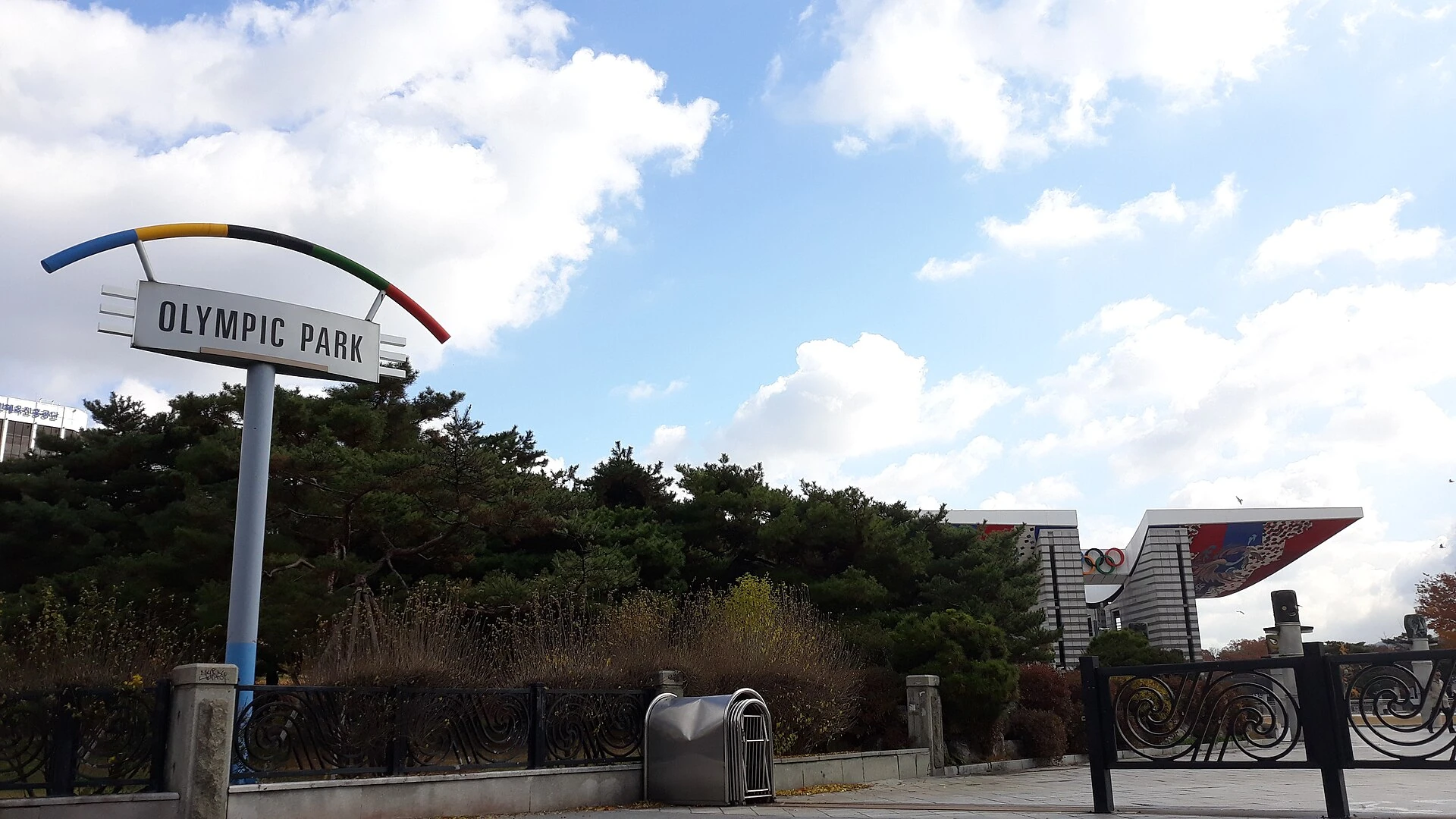
Olympic Park is large enough that the nearest station to one attraction can be the wrong starting point for another. The World Peace Gate, historic Mongchon landscape, sculpture areas and sports venues create several different outings. Choose the part you want before choosing a subway route, then add the art museum only if its actual exhibition interests you.
A park map should reduce the plan, not encourage you to cover every named zone. One public landmark, one landscape section and a clear return can reveal more than an exhausting perimeter circuit. A concert ticket creates another kind of visit entirely, with its own hall, queue and exit arrangements.
Park access and indoor venues run on different clocks
The park operator’s general information lists free park admission and walking/cycling entry from 05:00–22:00. The Peace and Meeting squares have an exception until midnight; the operator restricts access to other park areas after 22:00. Do not turn the square exception into a claim that every trail remains open for a late-night visit.
The site address is 424 Olympic-ro, Songpa-gu. That address does not identify the best gate for every facility. Use the operator’s transport and gate guide to connect the station with the actual zone or building you selected.
| Your priority | Useful approach to investigate | What to keep out of the base plan |
|---|---|---|
| World Peace Gate and a short western park visit | Mongchontoseong Station, Line 8, Exit 1 | A journey across the park to every sports venue |
| An event near the eastern venues | Olympic Park Station, Lines 5/9, Exits 3/4; follow the event’s own entrance | A western sightseeing loop before an admission deadline |
| SOMA exhibition | Confirm the gallery building and its specific route; operator information distinguishes South Gates 3/4 | Assuming every sculpture area and exhibition uses one ticket |
| Mongchon landscape | Choose the actual path and an achievable return on the official map | A complete park circuit by default |
A first outing from the World Peace Gate
Begin with the gate and Peace Square if the Olympic story and public space are the reason for visiting. Orient yourself to the map before following a path deeper into the park. Notice the relationship between the monumental entrance, open space and surrounding landscape rather than treating the gate only as a portrait background.
Then choose one nearby park section for a walk and a rest. Keep the same station area as the return unless a specific onward destination makes another exit better. That creates an outing you can shorten without ending far from the rail line you know.
For a group with different walking tolerances, agree on a meeting place that is unambiguous on the map. “At Olympic Park” is too broad; a named entrance or information point is more useful. Do not make the person who needs a shorter route wait at an isolated point while everyone else follows an indefinite loop.
The Mongchon landscape supplies an older layer
KTO’s Olympic Park account explains that the 1988 Olympic landscape incorporates the early Baekje remains of Mongchontoseong and its moat setting. That gives the park a historical dimension beyond stadiums and lawns. Use the official interpretation to distinguish those remains from modern landscape work and sporting infrastructure.
Choose a permitted path that lets you see how the earthwork relates to its surroundings. Earthworks can be less visually obvious than a stone gate, so read the signs before deciding that the main subject is merely a grassy hill. Compare the height, line and surrounding open space from an allowed viewpoint.
Keep One Tree Hill or another photographed landscape as an optional destination, not a compulsory endpoint. A seasonal photograph does not establish today’s vegetation, access or crowd level. If the group’s energy has already been used by the first section, a shorter return preserves the value of what you have seen.
SOMA is an exhibition decision
The SOMA Museum of Art’s English site identifies current exhibitions and the sculpture-park setting. Before traveling for art, select the show and confirm whether it is in Building 1 or Building 2. A broad park pin and the name “SOMA” do not identify the actual gallery entrance.
The museum’s current admission page lists 10:00–18:00, last entry 17:00, with Monday, January 1, Seollal day and Chuseok day closures. Its ordinary prices are KRW 5,000 for ages 25–64, KRW 4,000 for ages 13–24, and KRW 3,000 for ages 7–12. Charges apply separately by building, and special exhibitions can operate a separate price policy.
Those details change the budget. An ordinary adult visiting two separately charged buildings would not have a KRW 5,000 total simply because each individual charge is small. First establish which building contains the exhibition you want, then read that exhibition’s actual ticket conditions.
The page also lists exemptions and free days, with special-exhibition exceptions. Do not infer that free park entry or a general age exemption covers every temporary show. The museum-admission guide explains why a permanent free collection, a free time slot and an identity-based exemption are different offers.
Use the sculpture setting as a way of looking
For an outdoor art visit, choose a small number of works rather than counting the whole park. Look at the approach from a public path, the way a work occupies space and how its material changes against trees, grass or architecture. Then read the label for the artist, title and relevant context.
Compare two works with different relationships to the landscape: one that draws attention to its own mass and one that lets the surrounding space remain prominent. These are observation questions, not a claim that you may touch or climb on the sculptures. Follow the individual work’s boundary.
In rain or poor light, an outdoor sculpture walk is still outdoors. A museum can be an alternative only if its gallery is operating and the exhibition fits the group. The existence of an indoor building somewhere in a large park does not create immediate shelter on every trail.
A concert visit needs a shorter sightseeing ambition
KSPO DOME and other event buildings are distinct venues within the park. Save the exact hall and the entrance on the ticket. Follow the organizer’s date, gate, bag and queue instructions rather than a generic park recommendation. A large event can change pedestrian flow and the practical journey back to the station.
If you want a park walk before a concert, make it a small version near the confirmed venue and preserve the admission buffer. Do not rely on a free-park closing time to establish when an event ticket office or entrance operates. After the show, the crowd’s nearest route may not be the best line for your accommodation, so retain your own return plan.
Leave with a clear reason for choosing this part of the park: Olympic commemoration, Baekje landscape, sculpture or a particular performance. Each can support a worthwhile visit. The subway planning guide helps turn the final station approach into an actual journey home rather than an afterthought.