
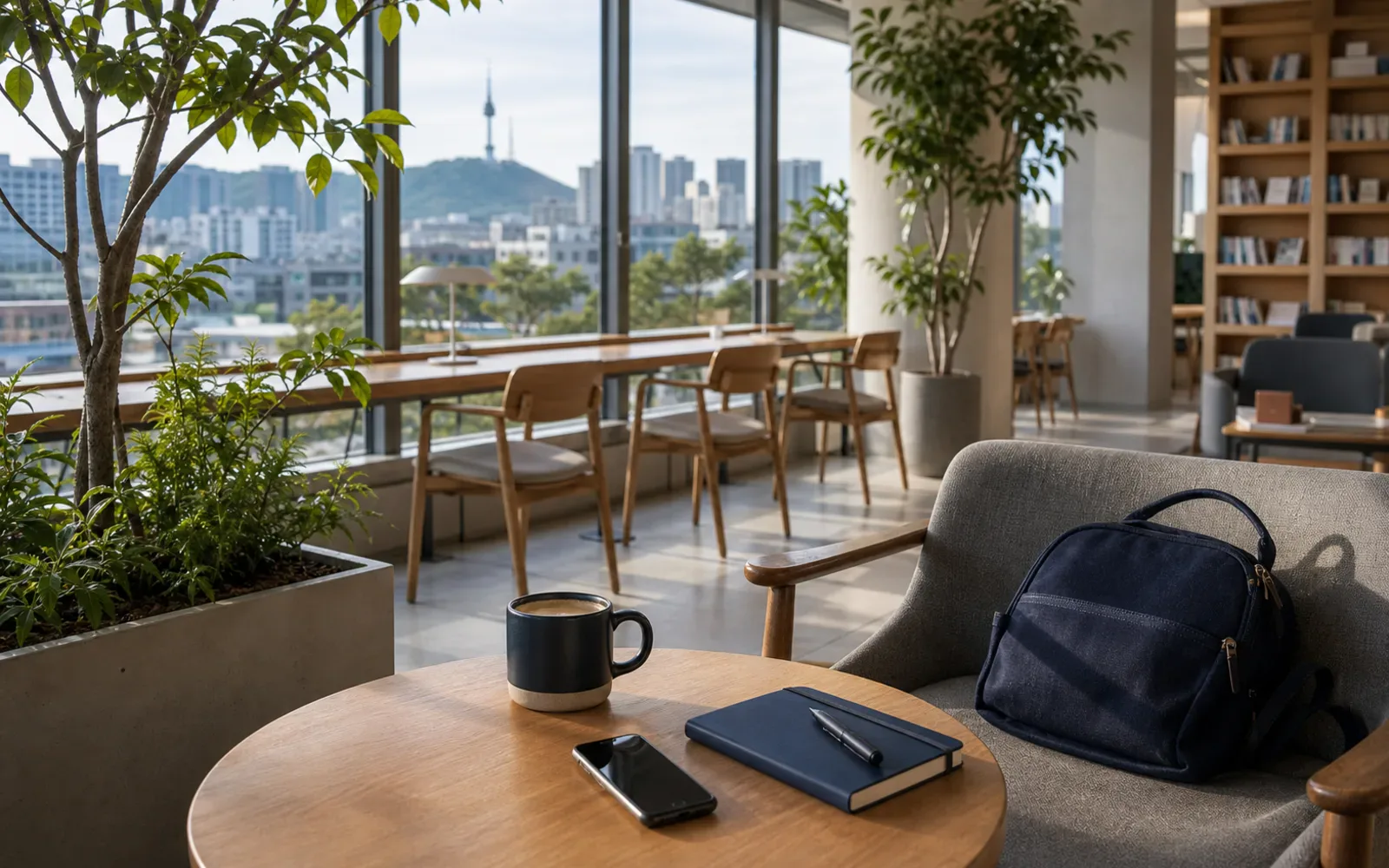
Quick take: Places to pause between sightseeing, shopping, and dinner when you need a calm hour without going all the way back to your hotel.
Why It Is Worth Saving
This guide is useful for visitors planning a slower day. It focuses on a plan in Seoul that feels clear before you leave the hotel. The point is not to chase every famous stop. It is to choose a place that makes the rest of the day easier to build around.
The main anchor is calm places to pause without returning all the way to your hotel. That matters because Seoul and nearby cities can look compact on a map while still taking real time to cross. A good place guide should help you decide whether the stop fits your route, not just whether it looks nice in photos.
- Best timing: between shopping and dinner, after a museum, or when heat and crowds start to wear you down.
- Main cost note: Free to low-cost.
- Good fit for: Slow travel days.
Best Time to Go
Timing changes the whole experience. The easiest timing is between shopping and dinner, after a museum, or when heat and crowds start to wear you down. That usually gives you the best balance of access, comfort, and flexibility. If your day already has a reservation or a long transfer, treat this stop as an anchor rather than a bonus add-on.
Weekends can still work, but you should expect slower walking, fuller cafes, and more waiting around photo spots or stations. A weekday morning or earlier afternoon is often easier if you want to look around without feeling pushed by the crowd behind you.
How to Build the Route
A practical route starts with this rule: build one rest stop into the middle of the day instead of waiting until everyone is tired. Once that is clear, check the nearest station exit and the final walk. In Korea, the last ten minutes can matter more than the train ride if there are hills, stairs, rain, or heavy bags.
If you are using this as part of a bigger Seoul day, leave time for one meal and one quiet stop nearby. That small buffer makes the plan feel smoother and stops the day from becoming a checklist of disconnected places.
- Save the address in your map app before you enter the subway.
- Check the exit number, not just the station name.
- Keep one indoor stop nearby for rain, heat, or tired legs.
Cost, Comfort, and Small Details
Costs usually range from free to low-cost, but the real budget depends on what you add around it. A free neighborhood walk can become a moderate-cost afternoon once you include coffee, dessert, taxis, lockers, or a paid exhibition nearby.
Comfort matters just as much as price. Check seating availability, quiet rules, food purchase expectations, and nearby restrooms. These details are easy to ignore when planning from a laptop, but they decide whether the stop feels easy once you are already moving through the city.
Common Mistakes
The easiest mistake is using a busy dessert cafe as the only rest plan on a weekend afternoon. A place can be genuinely good and still be wrong for your specific day if it adds a long detour, a steep walk, or a late return across town.
Do not judge the plan only by distance in kilometers. In Seoul, transfers, station size, exit choice, and weather can change how simple a route feels. It is better to do fewer stops well than to rush through a list and remember only the transit.
A Simple Backup Plan
Your backup should be close enough that you will actually use it. Look for large bookstores, public libraries, museum lounges, and quieter side-street cafes. Put that option in your map before you leave, not after the main stop disappoints you or the weather changes.
A backup is not a failure. It is what makes the day feel relaxed. If the main stop is crowded, closed, or less interesting than expected, you can switch quickly and still keep the same general route.
How This Works in Seoul
Use this article as a planning tool, not as a rigid script. Start with the reason you opened it: calm places to pause without returning all the way to your hotel. Then decide whether the day you have in Korea actually supports that plan. Time, weather, bags, group size, and hunger matter more than a perfect-looking itinerary.
If you are deciding between several options, choose the one that keeps the next step simple. For this topic, that means following this route idea: build one rest stop into the middle of the day instead of waiting until everyone is tired. The more naturally it connects with your hotel, meal plan, and evening route, the more likely it is to feel useful in real life.
- Use it when: between shopping and dinner, after a museum, or when heat and crowds start to wear you down.
- Check first: seating availability, quiet rules, food purchase expectations, and nearby restrooms.
- Backup plan: Look for large bookstores, public libraries, museum lounges, and quieter side-street cafes.
If You Only Have One Stop
When time is tight, reduce the plan instead of rushing it. For visitors planning a slower day, the useful version is the one that solves the main need without adding a fragile detour.
Handle the main task first, confirm the detail that can change, and keep one backup within Seoul. Do not spend half the available time crossing the city for a small improvement.
How to Use Extra Time Around Seoul
With extra time, add depth rather than distance. Stay around Seoul, sit down for a proper break, compare a second nearby option, or add a quiet stop before moving on. This makes the day feel more local and less like a checklist.
For this guide, extra time is best spent close to the same backup plan. Look for large bookstores, public libraries, museum lounges, and quieter side-street cafes. That kind of nearby add-on keeps the plan flexible and gives you a softer landing if the main stop is busier, shorter, or more tiring than expected.
When This Place Fits Your Day
A plan fits when the cost, route, and effort all feel proportional. Cost note: costs usually range from free to low-cost. The area is Seoul, and the best fit is visitors planning a slower day. If those three details match your day, the guide is probably worth keeping.
A plan does not fit when you are forcing it around the problem it should be solving. If the main risk is using a busy dessert cafe as the only rest plan on a weekend afternoon, and your current day makes that risk likely, choose the backup instead. Korea is easier to enjoy when you let plans breathe.
Official Pages to Keep Open
Use KoriPicks for the practical route and decision-making, then use these official pages for the final check on dates, prices, access, tickets, transport, or closures.
Good Guides to Pair With This
These guides connect naturally with the same route, budget, timing, or first-time visitor questions, so they are useful when you are building a full day instead of reading one page in isolation.
Questions to Ask Before You Go
Is this places guide worth planning around today?
Yes, if the main goal matches your day: calm places to pause without returning all the way to your hotel. It is less useful when it creates extra transfers, unclear timing, or pressure to rush through a plan that should feel simple.
What should I check before leaving?
Check seating availability, quiet rules, food purchase expectations, and nearby restrooms. If any of those details are unclear, treat the plan as flexible and keep one nearby option ready before you start moving.
What is a good backup if the plan changes?
Look for large bookstores, public libraries, museum lounges, and quieter side-street cafes. A backup works best when it stays in the same district or on the same subway line, because switching plans should not require starting the day over.