
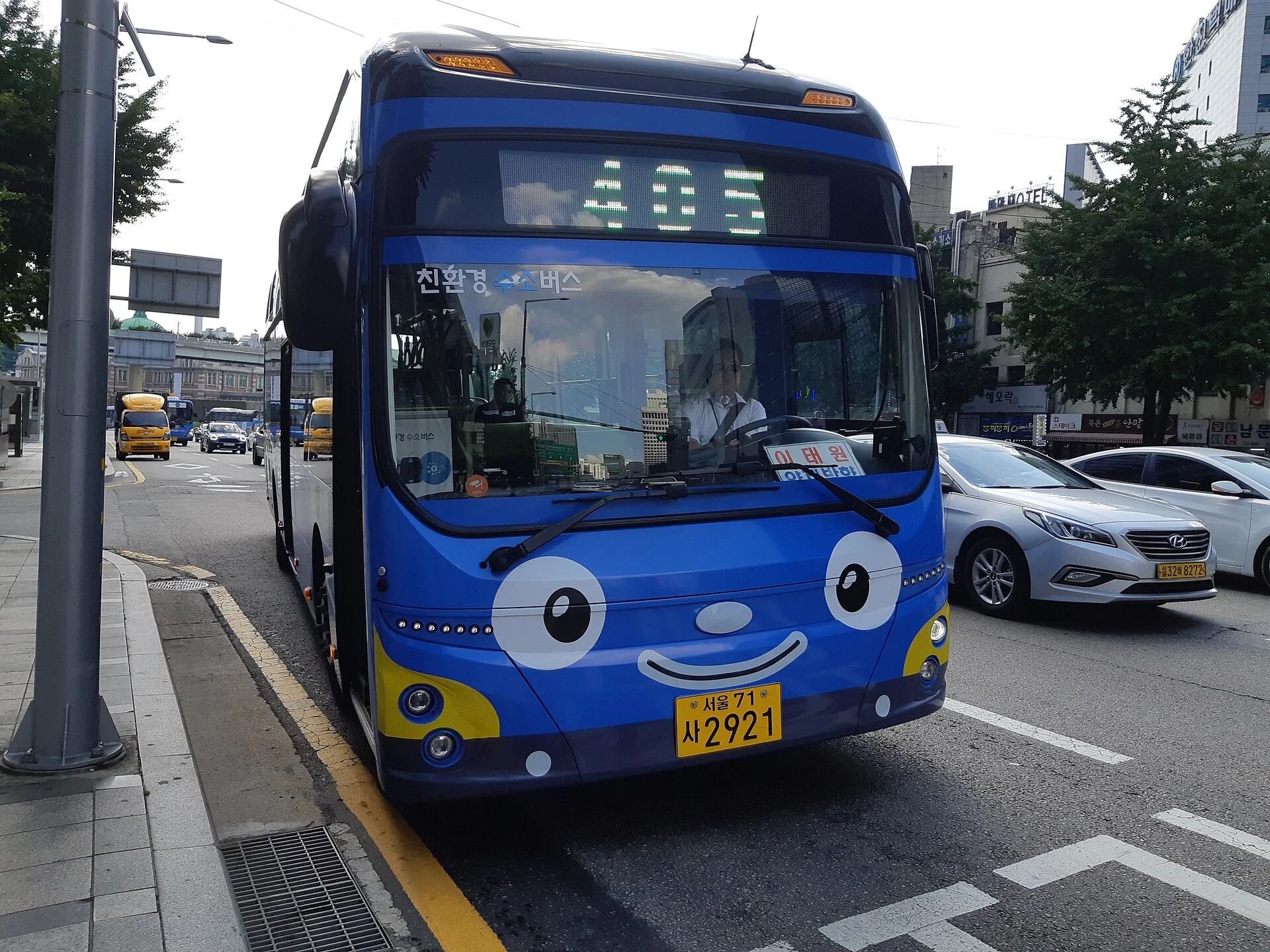
The difficult part of a first Seoul bus journey usually comes before boarding: finding the correct stop on the correct side of the road and confirming that the arriving bus goes in the right direction. Once on board, the next useful habit is simple—prepare to get off and tap the same transit card at the exit.
This guide covers Seoul city buses, not airport coaches or reserved intercity services. Fare and transfer information comes from the city’s published bus policy, checked October 17, 2026. A bus number and its current stop pattern still need a live route check for your actual journey.
Read the service, not just the color
Seoul’s official bus page distinguishes trunk, branch, rapid, circulation and night services. Color helps identify a type, but the route number and direction determine where you will go. Two buses at the same shelter can serve very different destinations.
Search for your destination using its correct Korean or official place name, then inspect the proposed bus stop, route number and direction. Some stops have a similar name on opposite sides of the road. Check the stop’s location and identifier where available rather than assuming the stop nearest your hotel is automatically the right one.
A route may also use a central roadway stop instead of the curbside shelter you first notice. Reach it using the designated crossing. A bus approaching through traffic is not a reason to cross outside the permitted pedestrian route.
A first ride, step by step
- At the stop: compare the arriving vehicle’s route number with your planned service. Read the direction and next-stop information where provided.
- At boarding: use the indicated boarding door and let the preceding passenger complete their card transaction.
- At the reader: present the intended transit card clearly and wait for its response. Keep other cards away from the reader.
- During the journey: hold on, move away from the doorway when possible and monitor your destination stop.
- Before the stop: use the stop-request button in time and prepare your card while remaining secure.
- At alighting: tap the same card at the exit reader and leave through the indicated door.
English information may be available, but this guide does not promise that every stop display, disruption notice or announcement will be in English. Save the Korean stop name and follow the journey’s progress on your map as a second reference.
What the published adult card fares mean
| Service | Published adult card fare | Boundary |
|---|---|---|
| Trunk/branch services | ₩1,500 | The ordinary blue/green categories listed by the city. |
| Rapid service | ₩3,000 | A different service category, not an ordinary trunk fare. |
| Owl night service | ₩2,500 | Night routes have their own fare category. |
The official table identifies its fare revision as effective August 12, 2023. These are published category base fares, not a price guarantee for every bus in the metropolitan area. Seoul village buses, services run by other municipalities, airport buses and premium or reserved services need their own fare check.
Use a suitable transit card with enough balance rather than relying on cash as your only option. Inspect the actual vehicle’s payment notices. The presence of a cash column in a general fare table does not establish that every individual bus will accept your intended cash transaction.
Transfers are conditional, not an unlimited free ticket
The city specifies a transfer boarding window of 30 minutes after getting off, extended to 60 minutes from 21:00 to 07:00 the following day. It allows up to four transfers, meaning five boardings, under the applicable system. The same vehicle or same route does not qualify as a new discounted transfer.
Tap when leaving the bus so the system has an alighting record. Missing that step can interfere with the transfer calculation. Use the same card throughout the linked journey; changing cards does not carry the earlier trip record into the new card.
The transfer fare applies the higher base fare among the modes used, with distance-based additions under the published rules. The city’s bus-only transfer explanation lists a 10 km base distance and ₩100 for each additional 5 km. Therefore “I changed buses within 30 minutes” does not by itself prove that no additional amount will be charged.
| Situation | What to check |
|---|---|
| Bus to another qualifying route soon after alighting | The exit tap, same card, time window and total fare calculation. |
| A stop for a long meal before the next bus | Whether the transfer window has expired; plan for a new fare when it has. |
| Back onto the same route to reverse a mistake | The city’s exclusion for same-route transfers; do not assume a discounted return. |
Groups should understand the card arrangement
The city describes multi-passenger transfers with specific conditions, including the same boarding/alighting points and passenger count, and excludes subway transfers in that arrangement. A family sharing one card should not assume it will behave like separate individual cards through every combination of buses and subway.
For a straightforward visitor journey, using an individual suitable card for each passenger can make the trip easier to track. Children and teenagers need the appropriate registered eligibility where applicable; do not select a discounted passenger type simply because an unregistered card has a different design.
The Tmoney operator guide explains its top-up and age-registration arrangements. For buying or reloading a card at a shop, see the convenience-store service guide.
Make getting off easier
Watch the map before the bus reaches the final stretch, especially when several nearby stops have similar names. A venue’s nearest stop may not be the one you selected for a different entrance. Keep the destination address available so you can reassess the final walk after alighting.
Press the stop button early enough to signal the driver, but do not stand or move in a way that risks a fall. Keep a hand available for support. If your card or bag is buried, organize it while safely seated rather than opening several bags at the door.
If you miss the stop, stay calm and get off at the next appropriate stop. Do not ask to be let out into traffic or between stops. Recalculate the route from your actual position; retracing one bus stop on foot is not always the safest or shortest option.
The transfer window is not a service guarantee
A valid 30-minute transfer window does not mean the next suitable bus runs within that period or that the route is still operating late at night. Check the actual next service and its direction before leaving the first stop. If the final bus is uncertain, decide on a workable return before committing to an evening outing.
For a timed booking, save both the alighting stop and the final entrance. A bus arriving on schedule can still leave an unsuitable walk if the wrong nearby stop was selected.
When another mode is a better choice
A city bus is less convenient when you have bulky luggage, an uncertain final stop or a transfer that is difficult for your party. Compare the whole journey, including the walk from the stop, rather than choosing a bus only because its estimated ride is short.
For the rail alternative, review the Seoul subway mistakes guide. For a late-night plan, verify the actual last service and return route instead of treating the presence of an owl-bus category as proof that a suitable bus will run past your destination.