
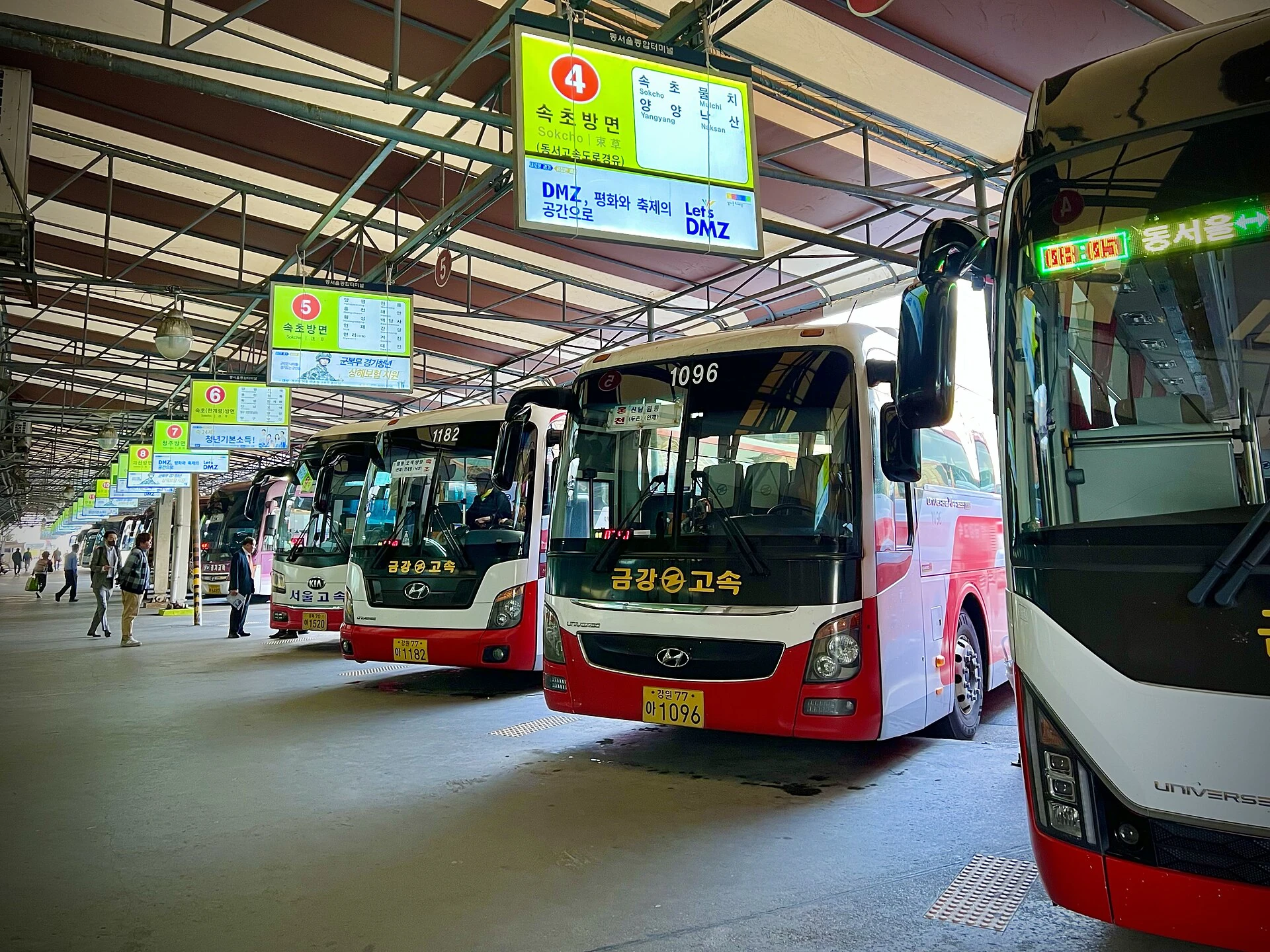
“Seoul bus terminal” is not a destination precise enough for a ticketed journey. The city has several terminals, and even the Express Bus Terminal area contains separate named operations. Start with the departure terminal printed in the actual service result, then plan how to reach that terminal and its boarding platform.
This guide is for reserved regional buses, not Seoul city buses or an airport shuttle. It uses Korea Tourism Organization and transport-operator information checked October 17, 2026. Timetables, payment functions and cancellation conditions must be checked again for the actual ticket you choose.
Express and intercity describe services, not just comfort levels
The KTO express/intercity bus guide distinguishes express buses using expressways for long-distance journeys from intercity services that can include intermediate cities and national roads. Both can have different seat or comfort categories. A premium seat label does not by itself identify the terminal or stop pattern.
Search the exact destination terminal, not merely the city name. Some cities have several arrival points with different access to the attraction or accommodation you want. A bus arriving earlier at the wrong terminal can leave you with a longer local connection.
Four Seoul terminal names worth distinguishing
| Terminal | KTO’s station reference | What to verify |
|---|---|---|
| Seoul Express Bus Terminal, Gyeongbu/Yeongdong operation | Express Bus Terminal Station, Lines 3, 7 and 9. | The exact service and terminal hall named in the result. |
| Central City Express Bus Terminal | The same metro interchange area, Lines 3, 7 and 9. | The Central City departure rather than assuming the neighboring express hall. |
| Seoul Nambu Terminal | Nambu Bus Terminal Station, Line 3. | This separate terminal and the actual regional route. |
| Dong Seoul Terminal | Gangbyeon Station, Line 2. | The Dong Seoul departure/arrival point rather than a Gangnam-area terminal. |
These station references establish the terminal area, not a measured transfer time or a particular step-free exit. Inspect the terminal’s current entrance information and your actual route from the station. Give yourself room for ticket collection and finding the platform.
Use the full terminal name in your map and accommodation plan. Abbreviations or English variants in a booking interface should be matched with the Korean terminal name when there is doubt. A map result for a similarly named shopping complex is not enough.
Find the route, then confirm that your channel can sell it
KTO identifies KOBUS for express-bus information and Tmoney/Bustago for intercity information, and also names affiliated international booking platforms such as Klook and Hanpass. A route appearing in a search does not mean every interface or payment method can complete its sale.
The public Tmoney intercity interface provides route and reservation information. Read its current notices before relying on payment through a particular language version. The English interface checked for this guide states that same-day web purchases close one hour before departure. That channel cutoff is separate from the typical boarding window and must not be generalized to every seller or terminal counter. Do not infer card acceptance merely from an English search form or a card-number field elsewhere in the site.
If a channel does not support your payment, check another official or KTO-identified channel for the same service, or use the departure terminal’s ticket office where appropriate. Compare the total charge, ticket format and cancellation terms. A platform’s service charge or redemption process can differ from a direct counter purchase.
A reservation needs a usable ticket
Read the result carefully before payment: departure terminal, arrival terminal, travel date, service time, seat class, passenger category and number of travelers. Confirm the exact local date for an overnight journey. A departure shortly after midnight belongs to the new calendar day, even if you mentally associate it with the previous evening.
After purchase, retrieve the actual ticket or reservation record and read its boarding instructions. KTO notes that some bookings require a printed ticket at the departure terminal. Others may provide a usable mobile ticket. Do not assume that every email, payment receipt or screenshot is itself a boarding ticket.
- Keep the reservation number and the contact information entered at purchase.
- Check whether a paper ticket must be collected and what document or payment card is required.
- Find the departure platform on the terminal’s live display.
- Compare the bus destination and departure time with your ticket before loading luggage.
- Retain the ticket and transaction record until the journey and any return issue are settled.
Arrive before the boarding window rather than treating it as a terminal-arrival target. KTO describes typical boarding five to ten minutes before departure. A traveler who reaches the metro station at that point may still need to find the correct building, obtain a ticket and locate the bay.
Plan luggage and the journey itself
Ask the operator or terminal about oversized bags, equipment, mobility needs or other items that may not fit ordinary luggage arrangements. The presence of an underfloor compartment is not a guarantee of unlimited capacity or acceptance of every object.
Keep documents, medicines you may need, payment cards and essential electronics with you rather than in an inaccessible hold bag. Identify your suitcase before placing it in the assigned compartment, and confirm where to collect it at an intermediate destination. Do not unload another passenger’s bag merely because it resembles yours.
KTO explains that long-distance buses generally use highway rest areas rather than onboard toilets. Whether and when a particular service stops should be checked for that journey. Do not plan on a specific rest break without confirmation, especially on a shorter route.
At a rest area, note the bus identity and the driver’s return instruction. Rest stops are not an opportunity for a separate sightseeing visit. Reboard on time and check that you are returning to the correct vehicle.
If a paper ticket is required, include the counter’s actual operating arrangements in the plan. A building being open does not establish that every ticket office is staffed or every machine accepts your payment method. Keep the reservation retrieval details available, and ask the seller how collection works before depending on a late arrival. A bus’s departure deadline and a counter’s closing time are separate constraints.
Make the return a separate booking decision
A morning outbound seat does not guarantee an evening return. Search the return terminal, service and date before committing to a tightly timed activity. The reverse journey might use a different boarding point in the regional city.
Build the local transfer into the return plan. If the attraction is far from the terminal, check how you will get back after your visit rather than using the outbound journey’s estimated time as a permanent rule. A missed local connection can become a missed reserved bus.
For a day trip, keep one return you can realistically reach and an understood backup. A list of possible departures is not equivalent to confirmed seats on all of them.
Cancellation is a transaction, not just a change of mind
Read the ticket’s current cancellation policy before paying. Timing, fare category, channel and special holiday periods can change the penalty. A reservation that is never issued or never canceled can carry a different outcome from a properly completed cancellation.
Use the booking channel’s retrieval and cancellation process, then keep the final confirmation. A failed connection or closed browser window does not prove the cancellation was accepted. If the journey is close to departure, contact the operator or terminal through its official channel rather than assuming an email request pauses the deadline.
If the regional destination can be reached comfortably by rail, compare the existing day-trip guide. For the local payment or station transfer before the coach journey, see payment preparation and subway navigation.