
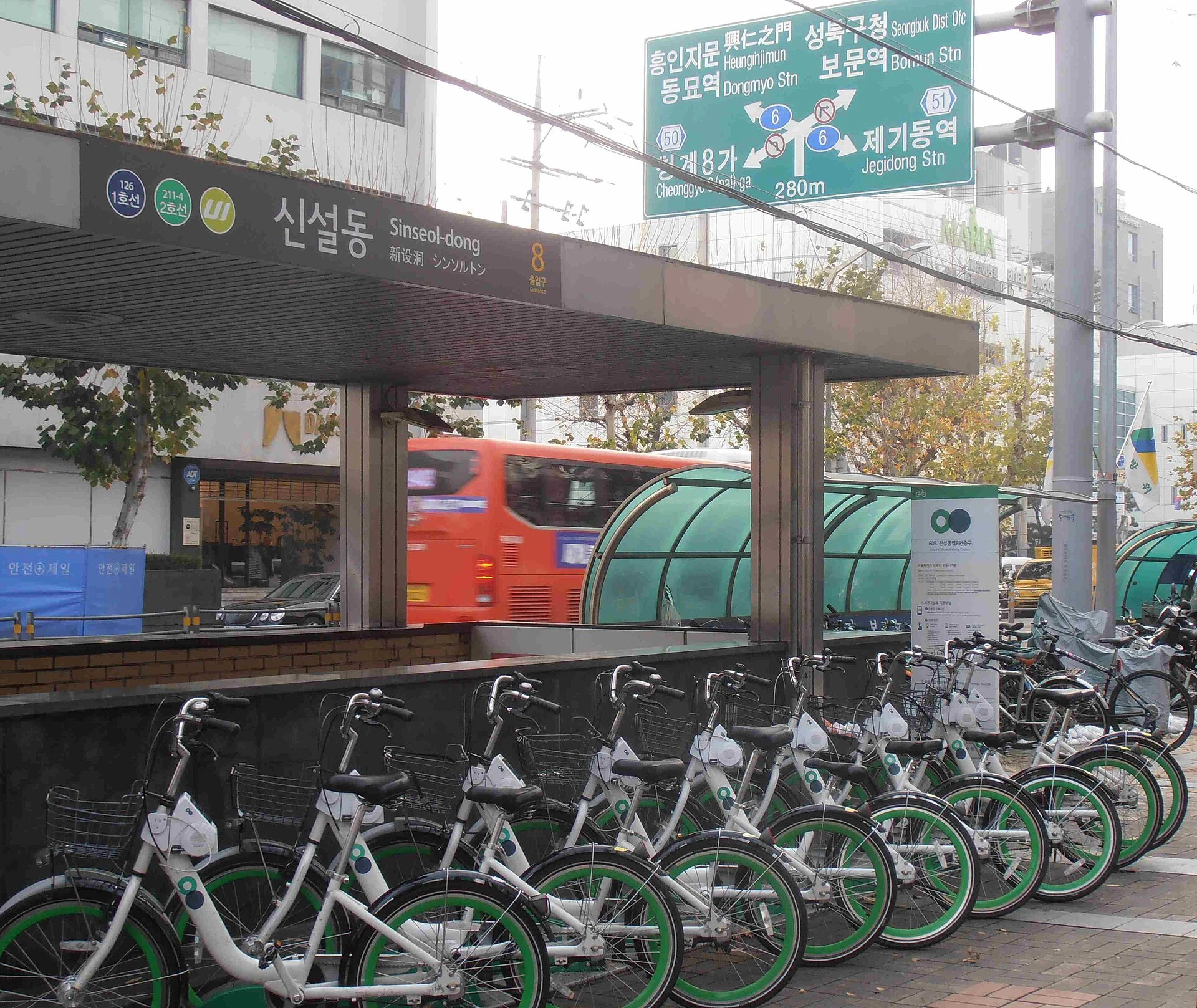
Seoul’s public bikes, Ttareungi or 따릉이, are useful for a short ride between official stations when you already know where you will return the bicycle. The main mistake is confusing the pass’s usable period with the time allowed for one continuous rental. A one-hour ride product is not permission to keep the same bike for the whole day.
Operator and city information checked October 17, 2026. This guide concerns the standard visitor rental route and current published fares, not an on-road test. Availability, app screens, foreign-card acceptance and temporary service restrictions must be checked in the live service.
Three checks before buying a pass
- Find an official departure station and a realistic return station near the end of the proposed ride.
- Confirm that the rider can use the bicycle safely and meets the product’s age and consent conditions.
- Open the official app’s visitor route and check the pass actually offered, its price, continuous ride limit and validity.
The operator’s current terms describe standard membership from age 13 for people able to ride, with legal-representative consent for a 13-year-old’s personal-information processing. Family products have separate conditions; this is not a guide to hiring a bike independently for a younger child. An adult visitor should not assume that buying a pass for themselves authorizes another person’s use.
Use the Foreigner route for an international visitor
The city’s official international-user instructions show a Foreigner selection on the app’s opening screen, followed by a pass choice, email entry and payment. The email is used for the pass code and recovery. Keep access to that inbox rather than entering an address you cannot open during the trip.
This route is different from registering as a resident member with a domestic mobile number. Use the actual service appropriate to your circumstances. The city’s guide was published in 2023; its illustrated sequence establishes the visitor pathway, while the current app and operator terms control today’s product choices and payment conditions.
Do not treat a successful download as a completed rental setup. Confirm that payment succeeded and that you can retrieve the pass before standing beside a bicycle with a timed appointment elsewhere. If your card or connection fails, keep the ride optional and use another transport method.
Read the ride limit separately from the pass period
| Published product | Published price | Continuous standard rental | Key rule |
|---|---|---|---|
| One-hour day pass | KRW 1,000 | Up to 60 minutes per rental | Return correctly within the limit before renting again |
| Two-hour day pass | KRW 2,000 | Up to 120 minutes per rental | The longer period is per rental, not an extra passenger entitlement |
| Three-hour day pass | KRW 3,000 | Up to 180 minutes per rental | Check that this product is offered in your selected visitor flow |
The operator’s fare page lists those prices and permits repeat rentals after a proper return within the relevant ride limit. Its validity example starts the day-pass period at the first rental, not the moment of purchase. The current terms describe 24 hours from rental start for these day products.
There is also a separately defined foreign-user all-day product allowing up to 24 hours without an intermediate return. Do not confuse that product with the ordinary one-, two- or three-hour day pass. Check its current visitor checkout price and conditions directly; this guide does not reuse an old all-day price as a current quotation.
A practical one-hour-pass example
Suppose your first rental starts at 15:00. Under the operator’s published day-pass example, the usable period extends to 15:00 the next day. That does not make a 15:00-to-18:00 continuous ride a compliant one-hour rental. You must complete a proper station return within the individual ride limit before renting again.
Plan a first ride comfortably shorter than the maximum. Leave time to reach the station, position the bike, lock it and confirm the return. A sightseeing stop while you still have the bike is part of that rental’s elapsed time; taking a photograph does not pause the clock.
The terms state an additional KRW 200 for each five minutes beyond the base rental period, with a stated maximum extra charge per rental. For an exact ten minutes over a base period, the published five-minute rate gives KRW 400 in additional time charges. That arithmetic is not a recommendation to ride overdue: non-return, loss and other service conditions remain separate obligations.
Before unlocking: inspect the actual bicycle
The operator’s safety rules ask riders to check tires, brakes and chain condition before departure and to wear a helmet. Adjust the saddle only through the provided mechanism and choose a bike you can control comfortably. If something appears wrong, use the service’s reporting process and another bicycle rather than testing the fault in traffic.
Do not assume a rental station supplies a helmet merely because bikes are present. Arrange suitable equipment before the outing. The public bike is a single rider’s transport device; keep luggage and belongings within the product’s instructions, and do not improvise a passenger seat.
Choose a first route that has a return solution
A short section near your existing district is a better first rental than a distant river circuit whose return stations you have not inspected. Use the live station map to find alternatives near the endpoint. A station marker indicates a service location, not a guarantee of a particular bicycle being available when you arrive.
Keep the route within the service rules. The terms require riding within Seoul’s administrative service area and returning at a Seoul public-bike station. A scenic path continuing beyond the city boundary is not automatic permission to take the rental on a regional journey.
For rain, strong wind, poor visibility or an official restriction, choose another mode. Do not make a prepaid bike pass the reason to ride in conditions beyond your ability. Keep phones and headphones from distracting you, obey signals and posted route instructions, and dismount when the situation calls for walking.
A return is complete only after confirmation
The operator’s QR-bike return instructions direct users to place the bicycle at an official station, pull the locking device into its locked position and check the return voice and notification. Re-rental is available only after a completed return.
Do not walk away solely because the bicycle is standing beside other bikes. Confirm the return in the service and check whether an extra charge remains. If the notification does not arrive or the app still shows an active rental, use official support while you are still beside the bicycle and can identify its number.
Remove your belongings before leaving, then retain the return record until the session is settled. The operator lists support at 1599-0120. For a day whose transport needs are mainly subway rides rather than cycling, compare the ordinary transit-card options instead of forcing a bike into the itinerary.