
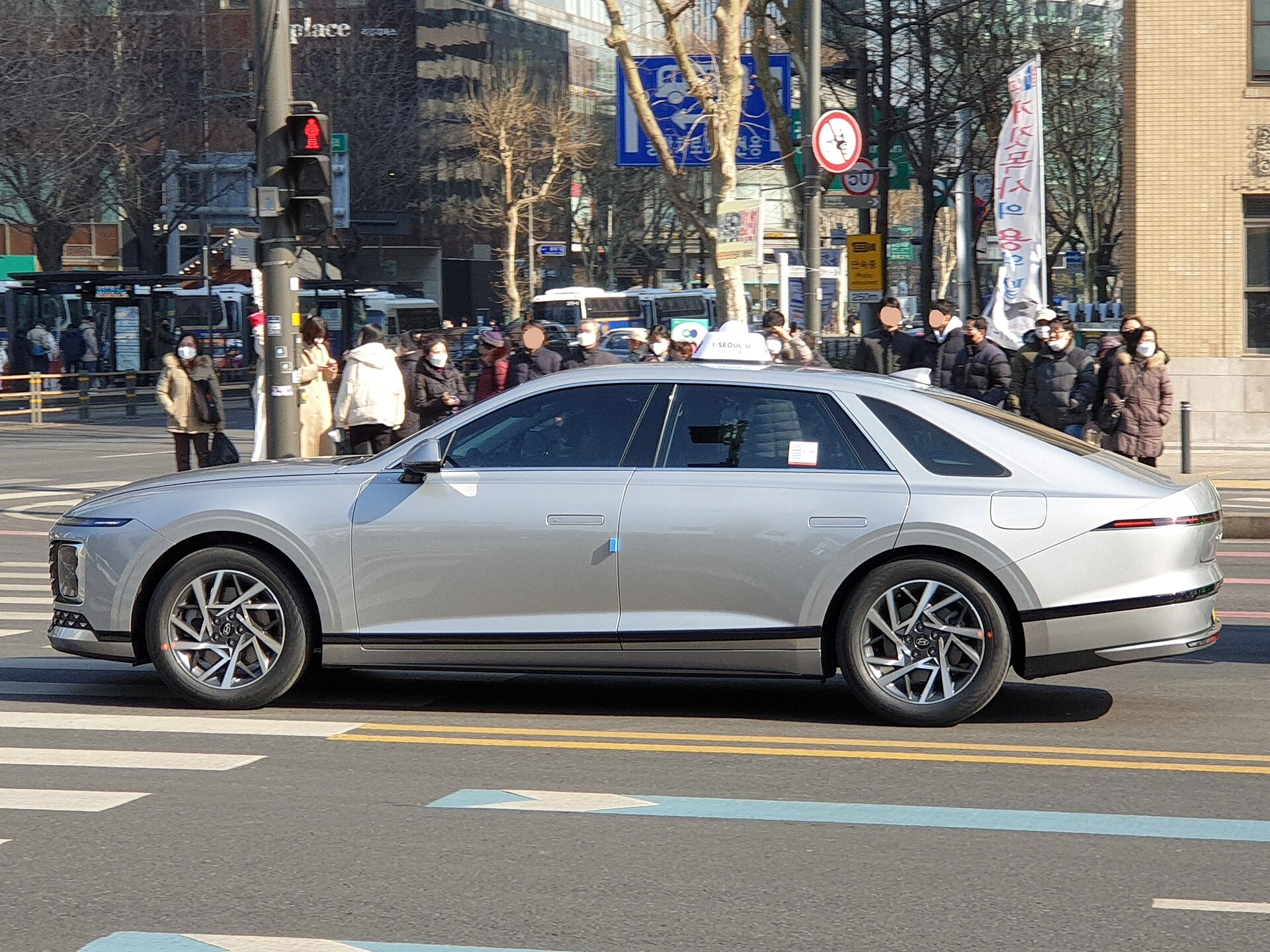
A taxi is most useful when the pickup and destination are precise. A car cannot solve the wrong terminal address, a suitcase that does not fit or a payment method selected incorrectly in an app. Before requesting a ride, settle the vehicle type, safe pickup point and payment arrangement.
This guide concerns ordinary Seoul taxi journeys. Airport trips, premium app products and larger vehicles can have different fare arrangements. The fare figures below are those published on Seoul Metropolitan Government’s official taxi page when checked October 17, 2026; they are not a quote for a particular journey.
First choose the service, then the car
A standard sedan, a deluxe taxi and an app-booked larger vehicle are different products. Do not identify the applicable tariff only from the vehicle’s paint color. Check the taxi designation or the service selected in the booking screen and ask when unclear.
| Need | What to verify | What not to infer |
|---|---|---|
| Ordinary city journey | The standard metered service and suitable pickup point. | That every car offered by an app has the same base fare. |
| Several large suitcases | Passenger and luggage capacity of the specific vehicle. | That an empty rear seat establishes adequate luggage capacity. |
| Airport or outside-city trip | The approved fare arrangement, tolls and any boundary surcharge. | That a short city-trip estimate covers the whole transfer. |
| Child or mobility requirement | The appropriate restraint/access arrangement and actual vehicle suitability. | That a taxi category automatically provides every required facility. |
The official Seoul taxi guide describes booking and visitor information. Use current operator details for the selected app or service rather than relying on an old screenshot of its booking flow.
Understand the published standard sedan tariff
The city’s taxi fare page publishes the following standard sedan amounts, identified there as effective from February 1, 2023. The current page still displays that tariff; a later official change or the applicable approved service terms would take precedence.
| Time | Published base fare | Initial distance |
|---|---|---|
| Daytime | ₩4,800 | Up to 1.6 km |
| 22:00–23:00 | ₩5,800 | Up to 1.6 km |
| 23:00–02:00 | ₩6,700 | Up to 1.6 km |
| 02:00–04:00 | ₩5,800 | Up to 1.6 km |
For daytime standard sedans, the page lists ₩100 per 131 m and a ₩100 per 30-second time component, with partial simultaneous distance/time calculation at low speed. Nighttime rates and outside-city surcharges differ. This is why multiplying a straight-line distance by one number does not produce a dependable final fare.
A route estimate can help compare transport options, but congestion, waiting, the approved tariff and extra charges can affect the total. Read an app’s fare explanation before accepting a fixed-price or premium product. If a figure is described as an estimate, do not treat it as a guaranteed ceiling.
Choose a pickup point the driver can actually use
At a station, hotel, shopping complex or busy attraction, use the designated taxi stand or the pickup point specified by the service. Stand on the correct side of the road. A pin placed on the opposite carriageway can turn a short pickup into a circuit around a one-way system.
Keep the car’s stopping area separate from your waiting space. Do not stand in a traffic lane or step into the road while watching the phone. If the requested point is unsafe or inaccessible, contact the driver through the service and move to an agreed safe location.
Before boarding an app-booked car, match its vehicle details with the booking. A nearby taxi is not automatically your assigned car. For a street or stand pickup, give the destination before the journey begins and confirm any special requirement before loading bags.
Show the destination in a form that is easy to use
Save the Korean address and exact building or entrance name. A translated hotel name can be ambiguous, particularly when a brand has multiple properties. For a large venue, identify whether you want the main visitor entrance, a particular hall or a transport terminal.
If a driver proposes a different drop-off point because the final road is restricted, ask what the remaining access involves. A short distance on a map may include steps, a steep approach or a controlled entrance. Choose an alternative that fits the people and luggage in your party rather than accepting an unexplained pin change.
For airport travel, specify the actual terminal and airline information where appropriate. This guide does not extend Seoul’s ordinary city tariff to every airport service. Compare the airport transport guide before deciding a taxi is the best fit.
Confirm payment before the end of the ride
Know whether the app will charge a registered payment method or whether you selected payment to the driver. Do not assume that using an app means the fare has already been settled. Conversely, if the app has already charged the ride, clarify the transaction before paying the same fare again.
Ask whether your intended card or cash payment can be accepted. A reader displaying a card logo does not guarantee every overseas-issued card will authorize successfully. Keep an accepted backup where possible, and read any exchange or extra-charge choice before approving it.
Request a receipt. It is useful for checking the fare, reporting an issue and identifying the vehicle after a forgotten bag. Keep the booking record as well if the journey was arranged through an app. A bank’s pending authorization alone may not identify the taxi as clearly as the actual trip receipt.
A luggage decision before the booking button
Imagine three adults with several large cases after checking out of a hotel. The party should first describe the passenger count and luggage to the selected service, then confirm the available vehicle. A statement that a car has enough passenger seats does not answer whether the cases fit in the intended luggage space.
Keep the pickup point close to the bags without blocking the hotel entrance or road. If the driver or service cannot accommodate the load, resolve that before the journey starts rather than improvising an unsafe arrangement. A larger approved service may have a different price structure; read that product’s terms instead of using the standard sedan table to challenge a different category.
At the other end, leave enough time to unload and check the luggage compartment. Count the bags with the party before the vehicle departs. This is a simple practical check, not a claim that a particular sedan or van has been measured for this article.
If the fare or service seems wrong
Stay focused on the specific issue: the service booked, meter reading, receipt amount, toll or duplicate payment. Ask for an explanation and retain the record rather than arguing from a rough online estimate. Do not photograph or publish unrelated personal details as part of a complaint.
The city’s multilingual taxi QR-reporting guidance explains a reporting route, and the taxi guide points visitors to the 120 Dasan Call Center. Check the current language-service hours and reporting requirements. These are service channels, not a promise of immediate compensation or a replacement for urgent police assistance.
Before closing the door at your destination, check the seat, footwell and luggage area. If something is missing later, use the receipt or app’s trip record promptly. For wider payment preparation, see paying in Korea as a visitor.