
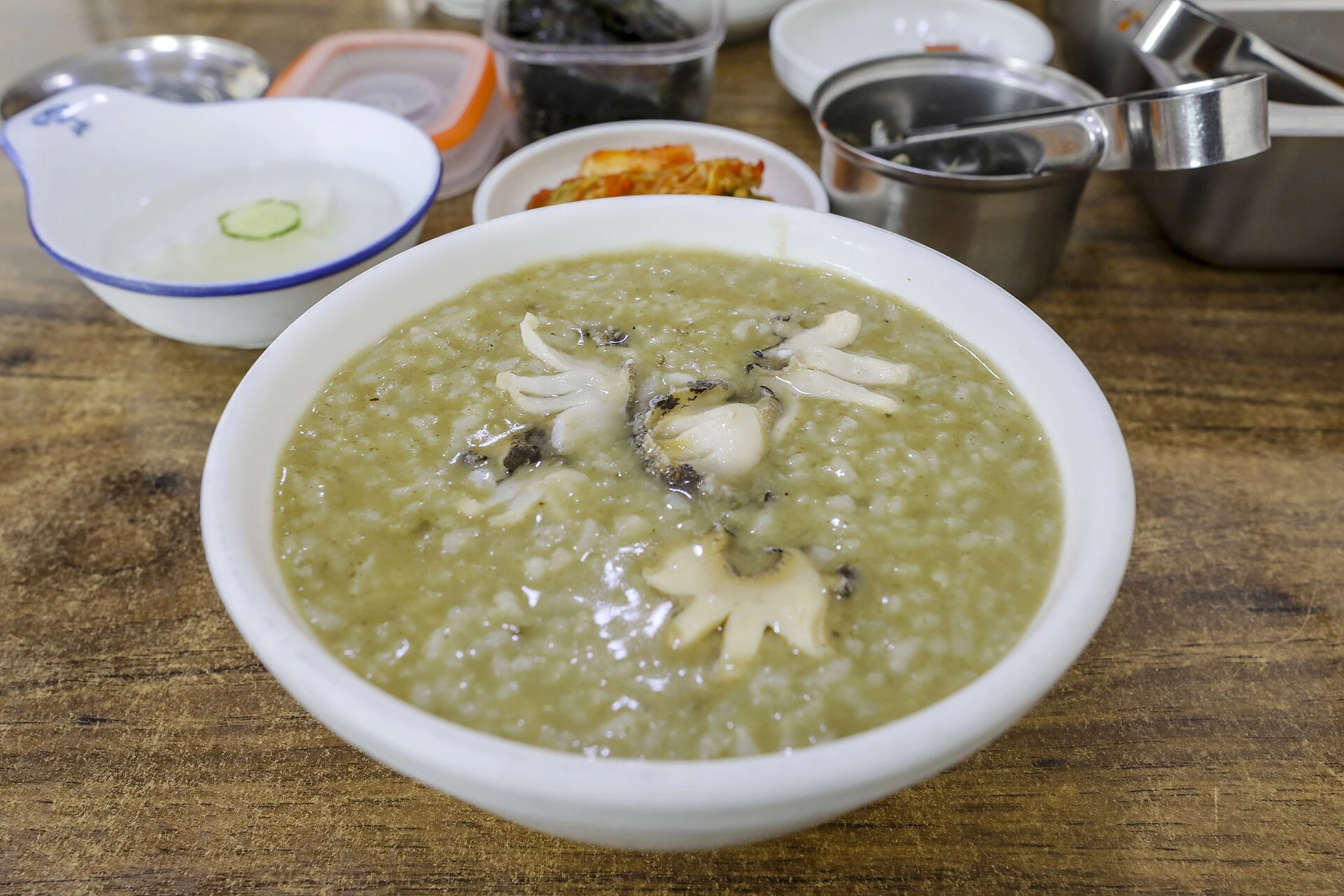
A Korean breakfast does not have to be a large set meal. A bowl of juk offers a spoonable rice dish; a soup restaurant gives a more substantial rice-and-broth start; a simple ready-to-eat purchase works when the morning is controlled by a train. The best choice depends first on the hour you can eat, then on ingredients and the next appointment.
Official venue information checked October 17, 2026. The two Myeongdong examples below are identifiable restaurants with published early opening times. They are research references, not recent tastings, guaranteed seats or a ranking of Seoul’s best breakfasts. Current notices and the actual menu take precedence.
Choose a breakfast format before choosing a famous name
| Your morning | Start with | What to verify | Possible drawback |
|---|---|---|---|
| You want a seated, spoonable rice meal | Juk, 죽, such as an abalone or mushroom porridge | Main ingredient, stock, portion and actual opening | “Plain-looking” does not mean free of seafood, milk, nuts or other restricted ingredients |
| You want a fuller savory meal | Gomtang or another soup with rice | Meat and stock, seasoning arrangement and ordering/payment sequence | A substantial bowl may be more than you want immediately after a flight |
| You must leave before nearby restaurants open | A ready-to-eat purchase planned the night before or near departure | Label, storage, equipment and where eating is permitted | A microwave-dependent meal can become unusable when the equipment is unavailable |
These are meal formats, not nutrition prescriptions. Juk can be pleasant when you want soft rice, but the dish name does not establish a medical benefit or suitability for a particular illness. Choose the actual recipe and portion that meet your needs.
Migabon: a porridge reference with a 07:30 opening
Korea Tourism Organization’s Migabon listing identifies a porridge restaurant at 56 Myeongdong-gil, second floor. It lists an opening time of 07:30 and dishes including wild pine mushroom and abalone porridge. A second-floor address matters: a pin at the street frontage is not necessarily the dining-room entrance.
For a morning visit, save both the Korean name 미가본 and the building address. Check the current entrance and opening notice before making it the only breakfast option before a fixed tour. The listing’s afternoon break is a different matter from the early opening; a restaurant trading for much of the day still does not promise every item throughout every session.
Read the porridge description before ordering. 전복죽 is abalone porridge; 버섯 in a dish name refers to mushroom. Those words identify a feature of the dish, not every ingredient in its stock and seasoning. If shellfish is excluded from your diet, choosing another porridge solely because the topping looks different is not enough. Ask about the recipe and shared preparation, or select a provider able to answer.
Start with the porridge you actually want rather than adding a second main because the menu has many variants. Confirm whether the displayed portion is intended for one diner and whether any accompaniments are part of that order. The current menu should establish the price; this guide does not reproduce an old bowl price as a new quotation.
Hadongkwan: an earlier soup option, with a Sunday closure
The official Hadongkwan main-store listing gives 12 Myeongdong 9-gil, ordinary hours of 07:00–16:00 and Sunday closure. It describes gomtang with beef cuts, notes advance payment and says the restaurant can close when its day’s supply runs out. Do not treat the published afternoon closing time as a stock guarantee.
This is a different breakfast from porridge: a meat-based soup meal with its own texture, portion and seasoning. 국물 means broth; 고기 means meat. If a particular cut or organ meat matters to you, ask before paying rather than assuming all soup bowls contain the same selection. Someone who avoids beef needs another breakfast plan, not simply a request to remove visible slices from a beef-based soup.
Follow the actual ordering sequence on arrival. If payment is requested before the meal, settle the specific item and quantity first. Do not assume a nearby restaurant uses the same system. At the table, inspect the supplied condiments and taste before adding them; the presence of a salt container does not establish how much a diner should use.
Before 07:00: protect the departure rather than chasing a bowl
If you need to leave for the airport or a train before either of those examples opens, a restaurant detour is the wrong anchor. Arrange a suitable ready-to-eat breakfast and check the accommodation’s food-storage facilities in advance. A kettle is not interchangeable with a microwave, and a coffee shop opening nearby does not guarantee a full breakfast menu.
Use the product’s storage and date instructions for anything bought earlier. A refrigerated sandwich should not spend the night on a desk because you plan to eat it early. Keep preparation simple enough that a queue for a shared microwave cannot make you miss departure. Our meal-format comparison explains which purchases depend on hot water, microwaving or little preparation.
Put breakfast on the same route as the morning
For a Myeongdong hotel and a central-Seoul appointment, one of the named restaurants may fit without adding another subway journey. For a Hongdae or Gangnam stay, first compare an actual local opening against the time needed to reach Myeongdong. A verified early opening is useful evidence; it is not a reason everyone in Seoul should travel to that dining room.
Work backward from the fixed appointment. Write down the time you must leave the restaurant, the walk or transfer afterward, and the time you need to order and eat. Those are your planning allowances, not measured service times. If the proposed arrival leaves no margin for a queue, choose a less constrained breakfast instead of expecting staff to accelerate the meal.
Keep Sunday separate in the plan. Hadongkwan’s listed closure removes it from an ordinary Sunday shortlist. Migabon’s opening reference does not prove that a particular holiday or exceptional date follows the standard schedule. Confirm the selected date when breakfast is the hinge between accommodation checkout and a booked activity.
Useful questions at the door and counter
| Korean | Meaning | When to use it |
|---|---|---|
| 지금 식사할 수 있나요? | Can we eat now? | The premises are open but the meal service is unclear |
| 이 메뉴에 뭐가 들어가나요? | What goes into this dish? | Begin a specific ingredient discussion |
| 먼저 계산하나요? | Do I pay first? | The ordering sequence is unfamiliar |
| 한 그릇 주세요. | One bowl, please. | After identifying the exact dish you intend to order |
For a dietary restriction, add the actual ingredient and requirement; a general question is not an allergy clearance. Keep the answer tied to the dish being ordered. The food-ordering guide covers more detailed communication when a kiosk or table system replaces the counter.
Leave room for the rest of the day
A successful breakfast ends with enough time to reach the next stop, not with every side dish photographed. Choose one main, inspect the bill or receipt, and leave when the planned departure requires it. If the first option is closed or too busy, a nearby simpler meal is a better fallback than a second famous restaurant across the city.
The distinction is practical: use verified opening information to reduce uncertainty, then keep the meal proportionate to the morning. You can give a destination restaurant more time on a day when breakfast itself is the outing.