
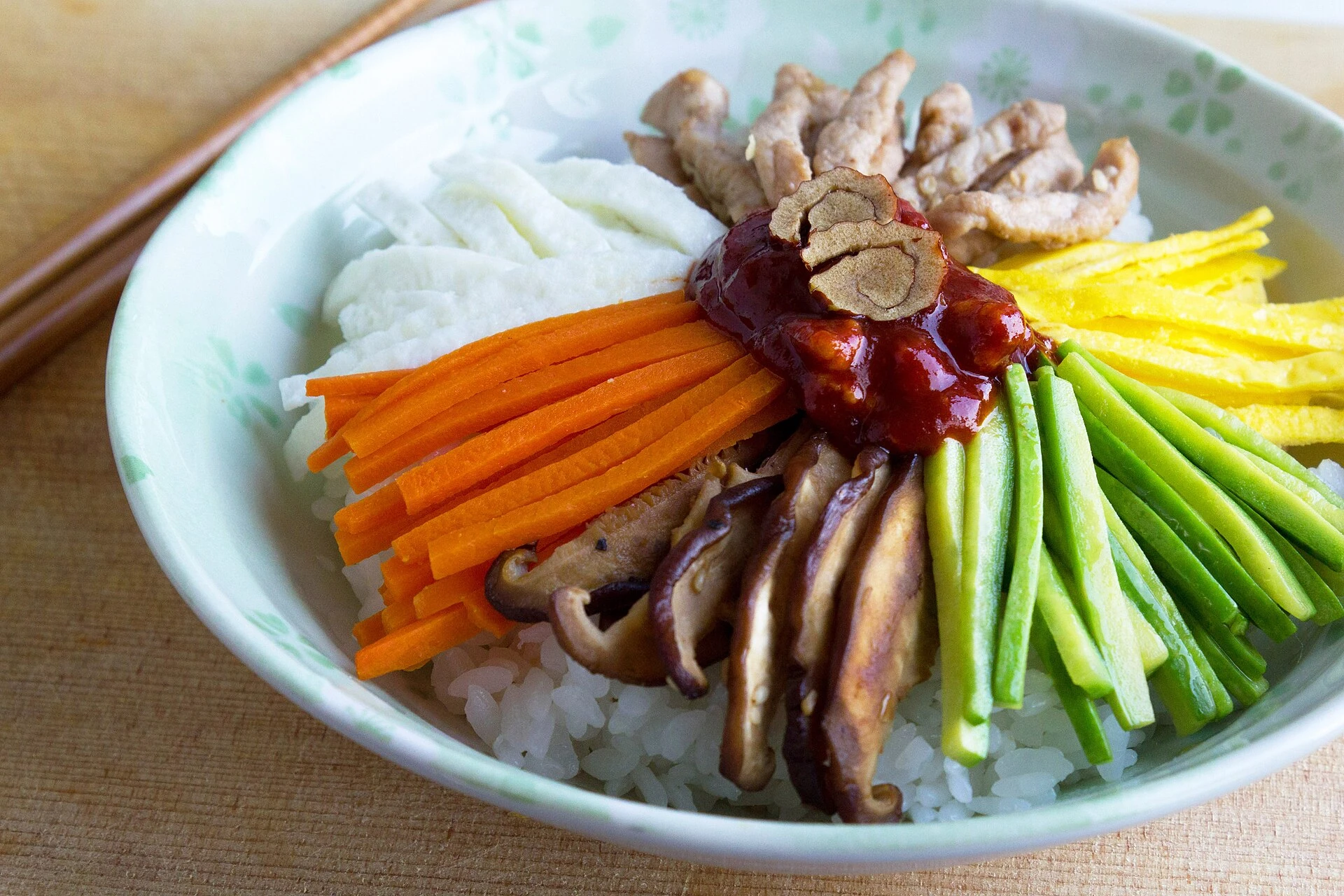
Jeonju is easier to enjoy when you choose one substantial meal and let the rest of the food day support it. Bibimbap, bean-sprout rice soup and Nambu Market are different experiences: a composed mixed-rice dish, a broth-led meal and a place where individual businesses or night stalls determine what is available. Trying to make all three full meals can leave little appetite or time for the city.
Official food and city information checked October 17, 2026. The routes below are editorial plans based on public sources. They are not recent restaurant visits, timed walks or a claim that every night-market stall operates on every advertised date.
Decide which meal is the anchor
| Choice | What makes it distinct | Best planning role | Check before ordering |
|---|---|---|---|
| Jeonju bibimbap | Rice with a composed selection of vegetables, beef and other ingredients, mixed with seasoning | A seated lunch you give proper time | Cooked or raw beef, egg, sauce and the actual set contents |
| Kongnamul gukbap | Bean-sprout rice soup with a specific broth | A simpler morning or daytime meal | Seafood stock, egg service and any ingredients you exclude |
| Nambu Market | Regular businesses plus a separately scheduled Friday/Saturday night market | A daytime browse or a confirmed evening food outing | The business or night-stall hours, not merely the market name |
Bibimbap: read beyond “vegetables over rice”
KTO’s Jeonju bibimbap entry describes a mixture including seasoned vegetables, beef and yellow mung-bean jelly on rice, combined with red chili paste. The vegetables are an important part of the dish, but their presence does not make every serving vegetarian.
Read the selected menu’s version. 육회 indicates raw beef; 돌솥 indicates a hot stone-pot presentation. A restaurant may distinguish these from its ordinary bibimbap, and each can have a different price and eating experience. Ask what you are ordering rather than assuming the best-known photograph represents every option.
If you want cooked beef, explain that before the order is accepted. If you exclude meat or seafood entirely, ask about toppings, broth or rice preparation, seasoning and accompanying dishes. Removing one visible garnish does not establish that the rest of the meal meets the requirement. The ingredient guide explains why stocks and sauces need their own check.
For an ordinary first lunch, order the specific bibimbap and inspect the supplied accompaniments before adding another main. Put in a little seasoning at a time if it is served separately. This gives you control over the bowl without treating the business’s complete set as an instruction to order several more dishes.
Bean-sprout rice soup: a different meal, not a vegetarian substitute
A concrete reference is Jeonju Waengi Kongnamul Gukbap, listed by KTO at 88 Dongmun-gil. The listing gives 07:00–21:00, last order 20:30, and describes anchovy and seafood in the broth. The dish’s bean-sprout name therefore cannot be used as proof that the soup is vegetarian.
Choose this kind of meal when a soup-and-rice format is what you want, then ask about the actual order. Egg and accompaniments can have a particular serving method at a business; follow the explanation rather than copying a preparation from another restaurant’s video. A city food specialty does not impose one procedure on every shop.
The published early opening can make the named restaurant a useful reference for a Jeonju morning. It is not a reason to add an early train from Seoul solely to reach breakfast there. If already staying in the city, compare its location with the morning’s actual route and verify the selected date’s service.
Nambu’s daytime market and night market are not the same schedule
Jeonju’s Nambu Market night-market page identifies Friday and Saturday evening operation. Its listed period ends at 23:00. A separate May 2026 city article lists Friday/Saturday 17:00–24:00. The common starting reference is 17:00, but the two official pages disagree about the finish.
Do not solve that conflict by choosing the later time because it is more convenient. Confirm the current operating night and final service through the market’s current notice or listed contact, +82-63-284-1344, especially if arriving late. An afternoon walk through the regular market does not establish that the night stalls are operating, and a weekday evening does not become a night-market session because shops remain open.
The city lists the market area using nearby addresses including 49 Pungnammun 2-gil and 19-3 Pungnammun 1-gil for the night-market reference. Save the specific area or business entrance you intend to use. A broad market pin is useful for orientation; a meeting point needs more precision.
A daytime visit from outside Jeonju
Make the meal you most want the main reservation or menu decision, then choose a short Hanok Village and Pungnammun-area walk around it. Keep transport to and from Jeonju Station or the intercity terminal as separate journey segments. Reaching Jeonju is not the same as standing beside the old-city food district.
If returning before evening, use the market as a daytime browse and do not build the day around night stalls you will not be present to see. Choose a lighter snack only if you still want it after the main meal. Leaving room for one thoughtful cultural stop is more rewarding than replacing the afternoon with a checklist of food purchases.
A Friday or Saturday overnight
An overnight stay is useful when the night market itself is part of the reason for coming. Eat a daytime meal, settle accommodation and luggage, then return for a confirmed evening session. This removes the pressure to finish a market order immediately before a long station transfer.
Start with one or two stalls whose displayed dishes, quantities and prices are clear. Share only where that suits the food and the group, and use designated eating areas rather than blocking the circulation route. A large festival-like atmosphere does not establish that every stall has seats, takes the same payment method or supplies the same portion.
Retain an ordinary restaurant alternative. Rain, operational changes or a particular stall selling out can alter the evening. A market is a collection of businesses, not a single restaurant guaranteeing a complete menu until the published closing minute.
Budget with the purchase units visible
Keep the seated main, market snacks, drinks, local transport and any accommodation on separate lines. Confirm whether a displayed amount buys one item, one plate or a set. No fixed “Jeonju food day” price is quoted here because that total depends on actual menus and how many complete meals you choose.
If comparing a day trip with an overnight visit, add the room and changed transport rather than describing the night-market food as the only extra cost. An overnight can be worthwhile for a slower city visit, but a small snack saving cannot justify its cost by itself.
Leave with a clear Jeonju experience
Bibimbap, a bean-sprout soup and a market are useful choices because each gives the day a different shape. Pick the one you care about most, check its ingredients and service, and let the rest remain optional. The Seoul market-ordering guide offers useful portion questions, while our payment guide helps prepare a practical card-and-cash backup.
Jeonju deserves more than a hurried sequence of three full meals. A focused food plan leaves time to notice the streets, understand what is in the bowl and get back to the station or accommodation without turning dinner into a deadline.