
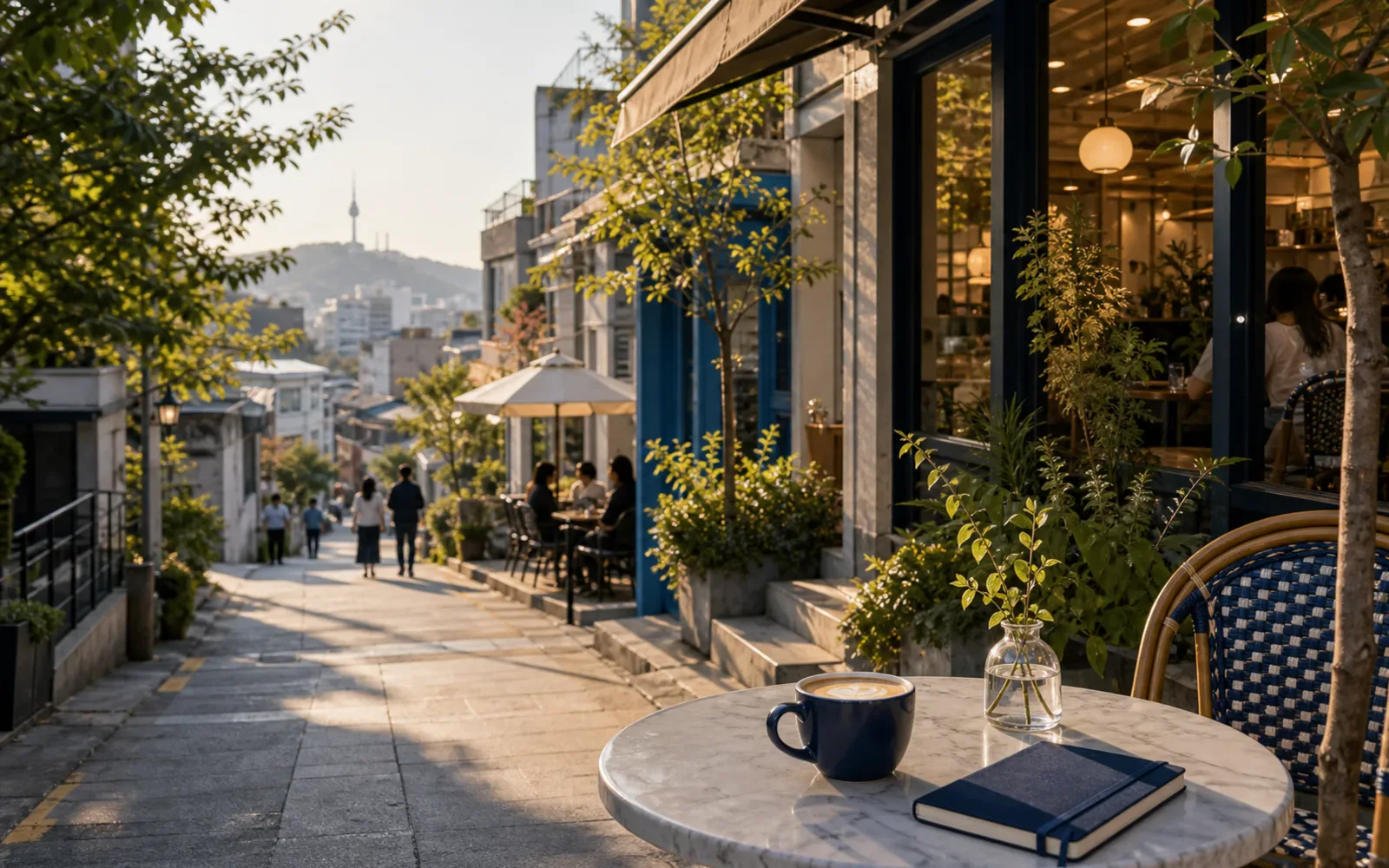
Quick take: Cafe neighborhoods for reading, planning, photos, dessert, and taking a slower break between bigger Seoul plans.
What to Expect Before You Sit Down
This guide is for visitors planning a slow afternoon. It helps food in Seoul feel easier before you walk into a restaurant. Food choices in Korea can be simple once you understand the order flow, table expectations, and what questions matter most.
The practical anchor is cafe streets where a slow break can become the point of the afternoon. That is more useful than memorizing a long list of dishes because the best choice depends on timing, group size, comfort level, and how busy the restaurant is when you arrive.
- Best timing: after lunch, before dinner, or on days when you want fewer fixed bookings.
- Typical cost: Cafe purchase.
- Best fit: Slow afternoons.
How to Order Without Stress
Pick a street near another plan so the cafe stop does not cost a long transfer. Look for the ordering point first. It may be a kiosk, a counter, a table tablet, a bell on the table, or a staff member who expects you to be ready before they stop by.
Keep the order simple on the first visit. If the restaurant is busy, decide quickly, point to a menu photo when helpful, and use a translation app for specific ingredients rather than trying to translate the entire menu line by line.
Best Times and Seating
The easiest timing is after lunch, before dinner, or on days when you want fewer fixed bookings. That usually gives you more room to ask questions, compare options, or wait for a better seat. Peak lunch and dinner can still be fun, but they are less forgiving if you need extra time with a menu or kiosk.
Solo travelers, families, and first-time visitors should pay attention to seating style. Counter seats, food courts, casual noodle shops, and quick-service restaurants often feel easier than group-focused restaurants during peak hours.
- Arrive before the rush if you need time to read the menu.
- Check whether the restaurant has a minimum order per table.
- Choose a nearby backup before you get too hungry.
Cost, Portions, and Payment
The main cost is whatever you order at the cafe, but portions and table rules can change the real total. Some meals are priced per person, some are meant for sharing, and some restaurants expect each diner to order at least one item.
Before ordering, check weekend queues, seating rules, dessert sellouts, outlet availability, and closing time. This is especially important for dietary needs, late-night meals, street food, and restaurants where sauces, broths, or side dishes may contain ingredients that are not obvious from the main dish name.
Small Etiquette Points
Most food etiquette is practical: keep the line moving, return trays when the restaurant expects it, do not block the side-dish area, and avoid taking a table for a long time when people are waiting.
The mistake to avoid here is spending the whole afternoon waiting for one famous cafe. If you are unsure, watch what the tables around you do for a minute. That usually tells you more than trying to guess from a translated review.
Backup Meal Plan
Choose a useful backup before you leave for the meal. Save two or three nearby cafes and choose based on seats, not just photos. This matters if you are traveling with dietary needs, a tired group, or a schedule that could push dinner later than expected.
A backup does not have to be special. It just has to be close, open, and easy to order from. That is enough to keep the day moving when the first choice has a long queue, a confusing menu, or no available seats.
How to Use This Before You Order
Use this article as a planning tool, not as a rigid script. Start with the reason you opened it: cafe streets where a slow break can become the point of the afternoon. Then decide whether the day you have in Korea actually supports that plan. Time, weather, bags, group size, and hunger matter more than a perfect-looking itinerary.
If you are deciding between several options, choose the one that keeps the next step simple. For this topic, that means following this route idea: pick a street near another plan so the cafe stop does not cost a long transfer. The more naturally it connects with your hotel, meal plan, and evening route, the more likely it is to feel useful in real life.
- Use it when: after lunch, before dinner, or on days when you want fewer fixed bookings.
- Check first: weekend queues, seating rules, dessert sellouts, outlet availability, and closing time.
- Backup plan: Save two or three nearby cafes and choose based on seats, not just photos.
If You Need to Choose Quickly
When time is tight, reduce the plan instead of rushing it. For visitors planning a slow afternoon, the useful version is the one that solves the main need without adding a fragile detour.
Handle the main task first, confirm the detail that can change, and keep one backup within Seoul. Do not spend half the available time crossing the city for a small improvement.
How to Use Extra Time Around Seoul
With extra time, add depth rather than distance. Stay around Seoul, sit down for a proper break, compare a second nearby option, or add a quiet stop before moving on. This makes the day feel more local and less like a checklist.
For this guide, extra time is best spent close to the same backup plan. Save two or three nearby cafes and choose based on seats, not just photos. That kind of nearby add-on keeps the plan flexible and gives you a softer landing if the main stop is busier, shorter, or more tiring than expected.
When This Food Plan Makes Sense
A plan fits when the cost, route, and effort all feel proportional. Cost note: the main cost is whatever you order at the cafe. The area is Seoul, and the best fit is visitors planning a slow afternoon. If those three details match your day, the guide is probably worth keeping.
A plan does not fit when you are forcing it around the problem it should be solving. If the main risk is spending the whole afternoon waiting for one famous cafe, and your current day makes that risk likely, choose the backup instead. Korea is easier to enjoy when you let plans breathe.
Official Pages to Keep Open
Use KoriPicks for the practical route and decision-making, then use these official pages for the final check on dates, prices, access, tickets, transport, or closures.
Good Guides to Pair With This
These guides connect naturally with the same route, budget, timing, or first-time visitor questions, so they are useful when you are building a full day instead of reading one page in isolation.
Questions to Ask Before You Eat
Is this food & cafes guide worth planning around today?
Yes, if the main goal matches your day: cafe streets where a slow break can become the point of the afternoon. It is less useful when it creates extra transfers, unclear timing, or pressure to rush through a plan that should feel simple.
What should I check before leaving?
Check weekend queues, seating rules, dessert sellouts, outlet availability, and closing time. If any of those details are unclear, treat the plan as flexible and keep one nearby option ready before you start moving.
What is a good backup if the plan changes?
Save two or three nearby cafes and choose based on seats, not just photos. A backup works best when it stays in the same district or on the same subway line, because switching plans should not require starting the day over.