
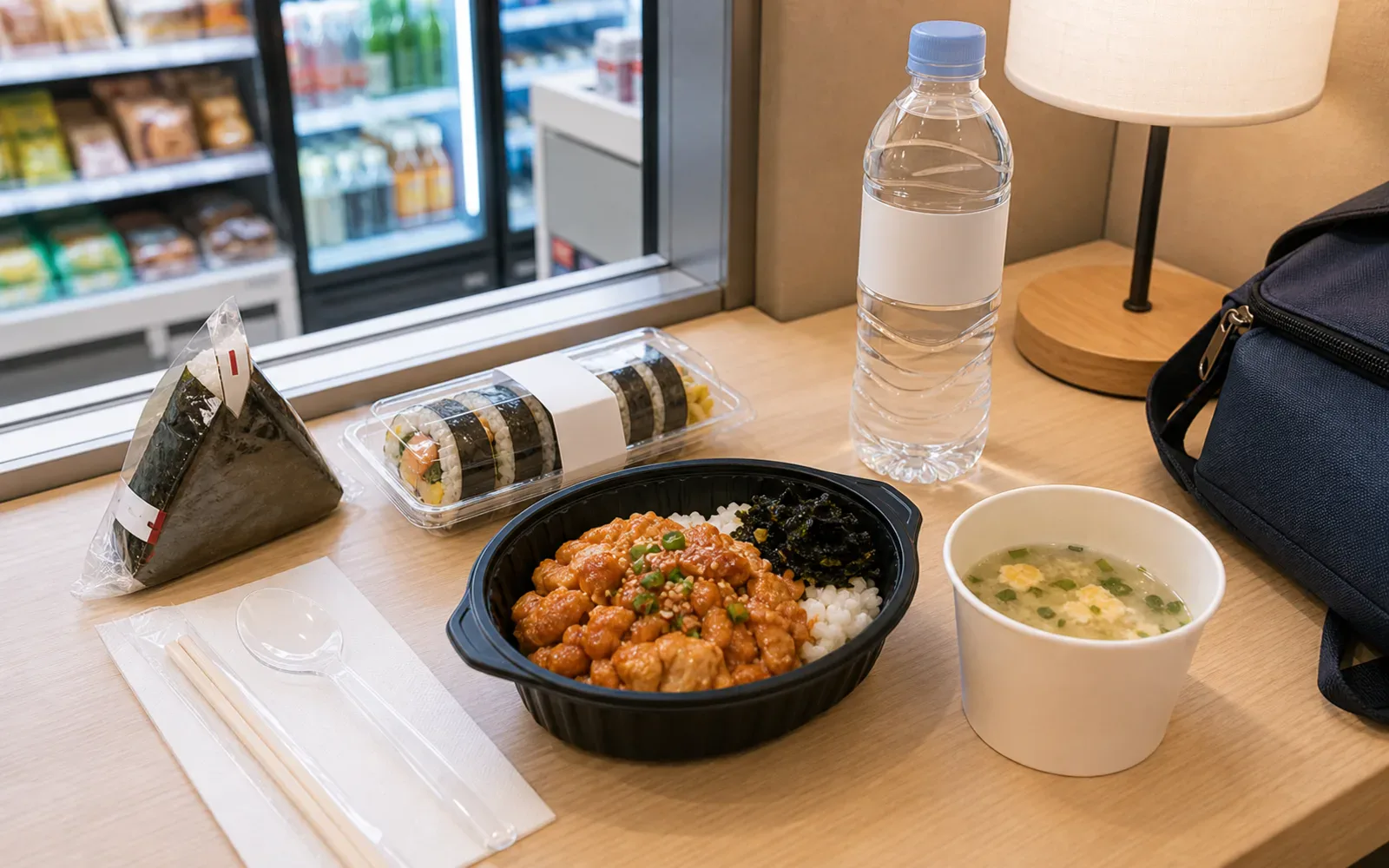
A useful convenience-store meal starts with the place where you will eat it. A chilled sandwich can work before an early train; a rice lunch box needs the preparation described on its pack; instant noodles need the correct cooking method and somewhere to handle hot liquid. Buying the most photographed product is less helpful than choosing food you can prepare and finish safely.
This guide compares food formats rather than ranking changing branded products. The combinations are editorial suggestions, not a fixed-price menu or a claim that every branch stocks them. For payment, transit-card top-ups and store facilities, use the separate convenience-store procedure guide.
Choose the format before the flavor
| Food format | Useful when | Check before buying |
|---|---|---|
| Samgak gimbap, 삼각김밥 | You want a compact rice-based snack or part of a small meal. | Filling, allergens, consumption deadline and the pack’s heating instructions. |
| Gimbap roll, 김밥 | You want portions that are easier to share or eat gradually at a table. | Meat, fish, egg and other fillings; storage requirements and preparation label. |
| Dosirak lunch box, 도시락 | You have a microwave and a permitted place to sit. | Heating wattage/time, any removable components, and whether the tray is intended for microwaving. |
| Cup noodles, 컵라면 | You can use the required hot-water or microwave method. | Which method the particular container allows; fill line and waiting time. |
| Sandwich, yogurt or fruit | You need a meal with little preparation. | Refrigeration, ingredients, utensils and whether the portion is enough for you. |
“Vegetable,” “tuna” or a picture of rice does not describe every ingredient. Sauces, stock, mayonnaise and processed toppings can change whether a product fits your needs. Treat the product in your hand as the source of truth.
Read four parts of the label
The Ministry of Food and Drug Safety’s labeling guide identifies ingredients, dates, storage and handling information, nutrition and allergen statements as important package information. A food photograph cannot replace those details.
- Date: look for 소비기한, the use-by information, and read the complete date and time when supplied. Do not mistake a manufacturing date for the consumption deadline.
- Storage: 냉장보관 means refrigerated storage; 냉동보관 means frozen storage. Follow the product’s temperature instruction rather than assuming the unopened pack is shelf-stable.
- Ingredients and allergens: inspect 원재료명 and the separate allergen statement. Translate the entire relevant section, not only the product name.
- Preparation: find 조리방법 and any microwave symbol, wattage, heating time or opening instruction.
If you have a serious food allergy and cannot confidently understand the ingredient and cross-contact information, choose another product or a meal provider that can answer the question. A store employee recognizing a flavor name does not establish that the manufacturer’s recipe or production line is suitable.
Three combinations for three different situations
A late arrival with no cooking equipment
Choose a ready-to-eat product whose label permits eating without heating, then add something you can recognize and use immediately: for example, a sandwich with a piece of fruit and water. Check the filling and any need for refrigeration. If the hotel is far away or you must queue for a bus, buy chilled food near the point where you will eat rather than at the start of a long transfer.
Do not buy a microwave-dependent dinner because the packaging looks like a complete meal. A kettle in a hotel room is not a substitute for a microwave, and the room may have rules about food preparation.
A hotel dinner with a microwave available
A labeled heat-and-eat lunch box can be a sensible main item. Compare the actual contents and portion size before adding side dishes. A large-looking tray may include compartments you do not want, while buying a second rice item simply because it is on promotion can create more food than you need.
If you want a lighter addition, look for an individually labeled side or fruit rather than guessing from the colors of mixed ingredients. These are practical combinations, not nutritional prescriptions; personal dietary needs differ.
An early train with little time to stop
Buy food that does not depend on a queue for a microwave or hot-water dispenser. A ready-to-eat rice product or sandwich can be easier than cup noodles. Keep any chilled item as instructed until departure, and check the train operator’s and station’s rules about where eating is appropriate. A crowded commuter platform is a poor place to open a meal, even if the shop is nearby.
Heat the package you bought, not the one you remember
Two similar rice boxes can have different preparation instructions. Find the microwave’s output and use the corresponding time on the pack. Remove or open only what the manufacturer tells you to remove or open. Do not put a condiment sachet, metal component or a container of uncertain suitability into the microwave.
For triangular gimbap, follow the numbered film-opening sequence shown on that specific wrapper. The film may separate the seaweed from the rice. Pulling everything at once can leave plastic trapped between the layers. If heating is advised, check whether the instructions require any wrapper change first.
Cup noodles also differ. Some are prepared with boiled water and a waiting period; others have microwave instructions. A paper-looking cup is not proof that microwaving is allowed. Read the label, keep the container upright and allow space to handle hot steam and liquid. If you cannot establish the preparation method, select a different meal.
What a cheap-looking deal actually buys
Compare the shelf price for the exact product and size. A “1+1” or “2+1” sign is useful only when the eligible products and checkout conditions match. Do not calculate a one-item dinner price by dividing a multi-item deal if you must buy more than you can use. Card-specific or membership benefits can have additional conditions.
No fixed nationwide meal price is given here: stock, portion, branch and promotions change. Add up the food, drink and anything else you need before paying. A restaurant with seating may be a better choice if the store meal requires several purchases and you still have nowhere suitable to eat.
Finish the meal without making a storage problem
Buy refrigerated food close to mealtime, especially in hot weather. The printed deadline does not cancel the storage requirement. Do not keep a lunch box in a warm daypack all afternoon on the assumption that reheating makes any handling history acceptable.
Use the branch’s designated eating area only if it exists and is open. Separate packaging and leftovers according to its disposal signs, and take your waste away if no appropriate facility is provided. For a sit-down meal with staff able to explain a menu, compare the food-ordering guide instead of forcing every dietary or seating problem into a convenience-store purchase.