
An accessible Seoul trip needs several connections to work together: airport arrival, a vehicle or transit route, the accommodation entrance, the venue’s usable doorway and any equipment required during the stay. A wheelchair symbol on one page does not confirm that complete journey.
Seoul Danurim is a useful official starting point, but its information service, airport minivan and assistive-device rental are separate services with different conditions. Establish the one you need and obtain approval for the actual reservation. This guide distinguishes the current published rules without promising that every traveler, device or date qualifies.
Use Danurim for a specific question
The Seoul Danurim English site organizes accessible destination information, transport and travel-assistive-device services. Its contact footer lists the domestic inquiry number 1670-0880, weekday 09:00–18:00 Korea time, and danurim@seouldanurim.net. The domestic-only number should not be presented as an ordinary international dialing option.
Begin with functional requirements: chair length and width, whether the traveler can transfer, the need to remain in the chair, the number of companions, luggage and the exact destination. These details are more useful for a travel-access inquiry than a broad description such as “needs assistance.” Provide only the personal documentation the official service actually requests through its legitimate channel.
| Service | What it can establish | What remains a separate confirmation |
|---|---|---|
| Destination information | Published features such as an accessible entrance or toilet | Current operation, the exact route and suitability for your needs |
| Airport minivan | An approved eligible airport-to-Seoul-accommodation transfer | Flight timing, chair compatibility, passengers, luggage and pickup |
| Travel-aid rental | A reserved available device under its rental rules | Fit, use, deposit, delivery, return and where it may be taken |
The airport minivan has defined eligibility
The official English minivan guide identifies wheelchair users and companions, requires at least one wheelchair user and at least two passengers, and gives capacity as two wheelchair places plus seven ordinary passenger seats. All passengers must submit proof of travel insurance by email to confirm the reservation.
The guide gives a reservation window from two months to 14 days before use and service hours of 09:00–18:00 Korea time. It lists vehicle, driver, fuel and tolls as covered, with personal expenses outside that provision. A free eligible service is not an on-demand taxi or a guarantee that a slot remains available.
Its equipment rule allows wheelchairs below the published 130 centimeter length and 76 centimeter width limits. Devices that cannot be properly secured, such as incompatible mobility scooters, are not accepted. Send the relevant dimensions and securement question to the operator before relying on the service; a chair’s compact appearance does not confirm fit.
Capacity should also be read with the actual traveling party and luggage in mind. Nine passenger places on a specification does not independently confirm room for every combination of large bags and devices. Ask the operator to approve the real configuration rather than treating the seating total as a complete loading assessment.
Confirm the December minivan service window
Danurim’s November and December service notices checked November 23, 2026 (Korea time).
The November notice covers November 1–30. A separate notice for December opens reservations on November 2 at 11:00 Korea time and lists service from December 1–11, 2026. It lists Incheon Airport terminals 1 and 2 or Gimpo Airport to or from accommodation in Seoul. A later December journey needs a new notice or direct confirmation.
The December notice says bookings can be made two weeks to two months ahead. For example, a December 8 arrival reaches the two-week boundary on November 24. This is a deadline calculation, not evidence of vehicle availability. Collect the flight number, terminal, hotel street address, passenger count and chair dimensions before asking for the operator’s confirmation.
Travel aids: use the actual rental page’s shorter period
The current English assistive-device page lists a rental period of three to seven days, including weekends and holidays. It accepts reservations from two months until 14 days before rental, subject to available stock. These service-specific terms should take precedence over broader overview pages that describe a different maximum period.
Eligibility is stated as a person requiring accessible tourism service, with use within Seoul. The page adds a specific exception allowing Seoul-based foreign residents to take rental equipment nationwide. A tourist staying in a Seoul hotel should not assume that this resident exception automatically covers a regional excursion.
The rental service operates approvals, collection and returns 09:00–18:00 on weekdays, closed on weekends and holidays. Delivery appointments can be chosen within 10:00–17:00. A seven-day rental that spans a weekend does not make the staffed collection point open on that weekend.
Plan the deposit, handover and return together
The device page makes the deposit item-specific and describes payment in person by an internationally usable credit card or cash. It gives a maximum deposit of KRW 500,000 when renting more than two items, and says exchange differences on reversal of a completed card transaction are not refunded. Read the amount for the actual device rather than treating that maximum as every visitor’s deposit.
The listed rental point is Room 101, B1,22 Huam-ro 48-gil, Yongsan-gu. The English contact shown is +82-10-2753-1877; the page also lists +82-70-8211-2728 for Korean/Japanese. Confirm the accessible approach and appointment directly. A basement address is not enough to infer an independent wheelchair route.
Free delivery within Seoul can cover a desired place such as a hotel or attraction, subject to the service arrangement. The person who made the reservation must receive and return the item. If the rental station is closed on the planned return date, the page instructs return on the preceding day. Missing the agreed delivery/return appointment can require an in-person station return.
Changes or cancellations should be emailed at least seven days before the rental date to rental_device@seouldanurim.net. Keep the accepted device, dates, deposit, handover place and return responsibility in one record. If the equipment is essential, arrange the approval before designing an itinerary that cannot function without it.
Connect the service to an actual venue entrance
For each major stop, confirm a chain of access: drop-off or station lift, public pavement, crossing, usable entrance, internal route, toilet and return. An accessible toilet inside a building is not useful if the route to the required gallery contains a barrier that has not been resolved.
Ask about a temporary closure, lift outage, door width or surface only where it affects the person’s needs. A concise inquiry can name the date, entrance and functional requirement: for example, remaining in a powered chair from the vehicle drop-off to the selected room. Do not settle for a general assurance that the venue “welcomes everyone.”
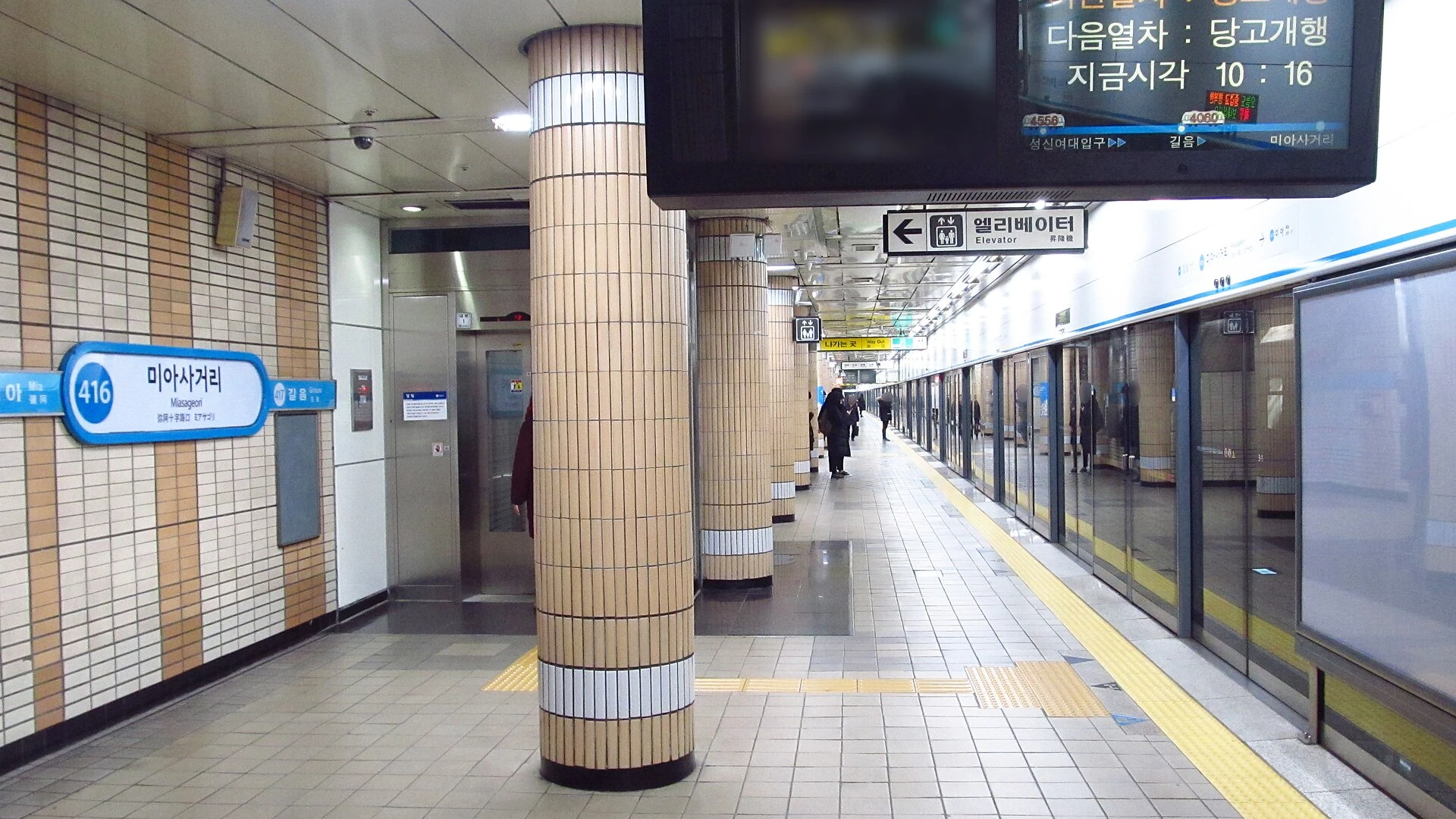
The Seoul subway guide explains why the correct exit and final connection matter. For a venue example, the National Museum of Korea plan separates the station from the museum entrance and the desired gallery. Use such planning detail alongside the venue’s current access answer, never as a universal accessibility guarantee.