
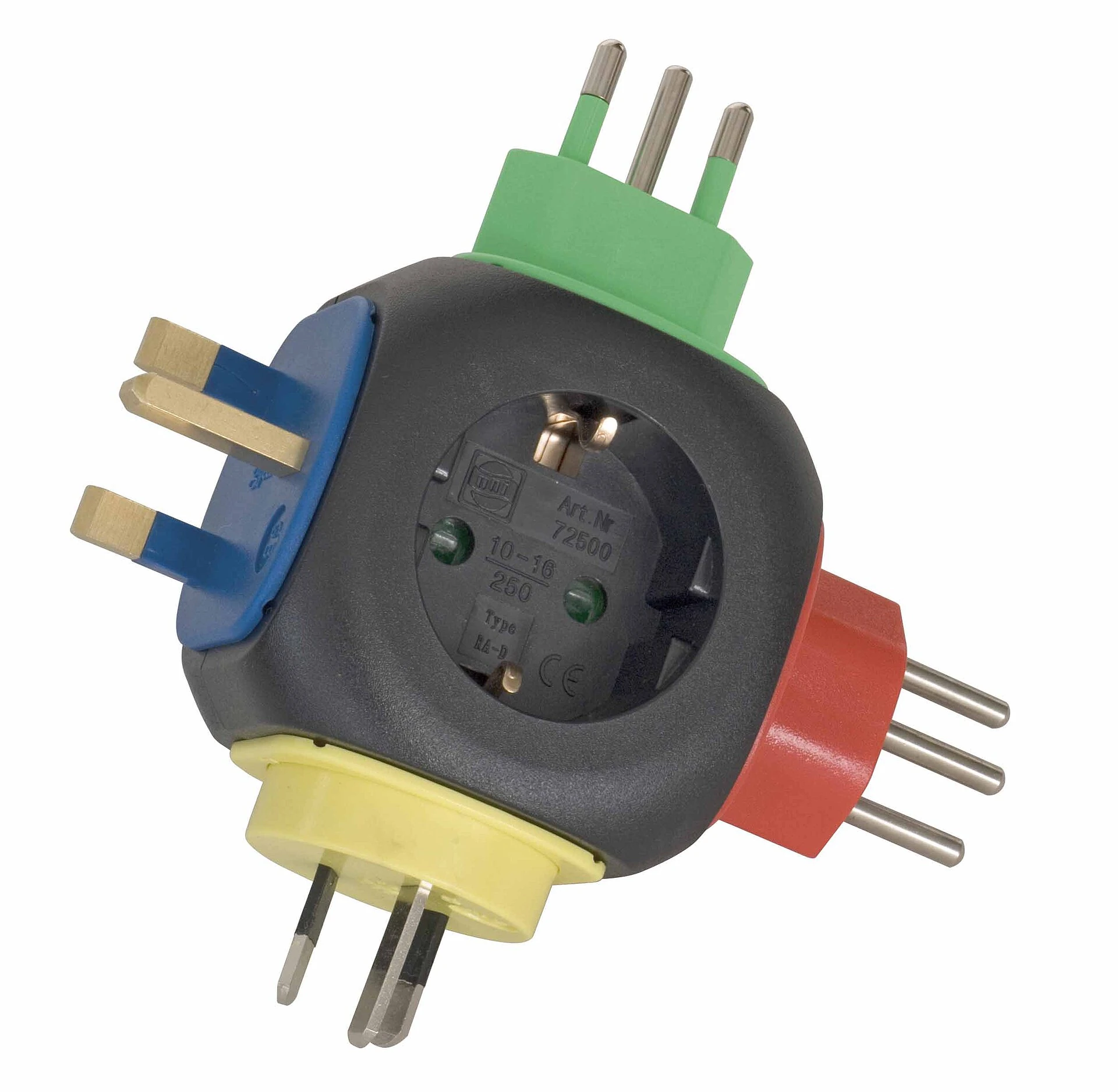
A plug that fits is only one part of electrical compatibility. Korea’s standard supply is 220 V at 60 Hz, while a travel plug adapter usually changes the shape of the connection rather than the voltage reaching your appliance. Read the appliance or charger’s input rating before deciding what to pack.
The aim is a simple safe decision about ordinary travel electronics. This guide does not provide DIY wiring instructions or certify an unknown charger, converter, appliance or hotel outlet. If a label or compatibility instruction is unclear, ask the manufacturer or a qualified supplier before connecting it.
Start with Korea’s supply and outlet shape
The Korea Tourism Organization’s electricity information states 220 V,60 Hz and outlets with two round holes. Visit Seoul’s practical information gives the same voltage and frequency.
That description is a starting point, not a promise that every travel adapter fits every socket or provides the required earth connection. Recessed sockets, the adapter body, pin dimensions and a device’s grounding requirements all matter. Buy an appropriate product for Korean use from a reliable supplier and follow its instructions.
A loose connection is not something to fix with pressure, improvised material or stacked adapters. If an adapter does not fit securely as intended, stop and ask for a suitable alternative.
Find INPUT, not just the USB output
Look at the power unit that actually connects to the wall. On a phone or laptop, that is usually the charger or power brick. The small print can contain several voltage values because the unit accepts one form of power and supplies another.
| Example text | Meaning for this decision | What it does not prove |
|---|---|---|
| INPUT 100–240 V~50/60 Hz | The stated input range includes 220 V and 60 Hz. | That the plug fits, the product is genuine or the charger/cable suits every device. |
| INPUT 120 V~60 Hz | The stated input does not include Korea’s 220 V supply. | That a simple shape adapter makes it safe to connect. |
| OUTPUT 5 V or 9 V | These are output values supplied to a connected device. | The allowed voltage at the wall-side input. |
These are teaching examples, not measurements from a product tested for this article. Read the complete actual rating, including any power limits and manufacturer instructions. If the label is damaged or unreadable, do not assume the unit is universal because a similar-looking charger worked on an earlier trip.
Adapter and converter answer different questions
A plug adapter addresses the physical connection. A voltage converter or transformer addresses a different electrical requirement, and choosing one involves the particular appliance and its power demands. Do not treat the word “universal” on a travel product as approval for every connected device.
If the input label already includes Korea’s supply, you may need only the appropriate physical connection, subject to the manufacturer’s instructions and safety requirements. If the input does not include it, do not connect the appliance through an ordinary shape adapter. Use a suitable local or manufacturer-approved alternative rather than improvising a conversion arrangement.
For a switchable-voltage appliance, consult its own instructions before travel. The presence of a switch does not tell you the correct safe handling procedure for that model. This guide does not instruct you to alter an appliance while connected or to modify any plug.
A verified charger example, with a clear limit
Apple’s USB power-adapter guidance says its USB adapters are designed for sources rated 100–240 V AC at 50–60 Hz. That is a manufacturer statement about those products, not evidence that every charger sold with a familiar-looking connector has the same specification.
Use the manufacturer’s identification and compatibility guidance for your actual adapter and cable. A connector fitting the phone does not establish the charger has the intended output capability or complies with applicable safety standards. Avoid damaged or doubtful equipment rather than using a travel adapter to make an unsafe product convenient.
If the charger has a removable wall attachment, use an attachment designed for that specific system. Do not force together pieces from unrelated chargers simply because they look similar.
High-power appliances deserve a separate decision
Hair dryers, straighteners and other heat-producing appliances can place different demands on a travel adapter from a small electronic charger. Check both the appliance’s input rating and the adapter’s permitted load. Do not infer high-power suitability from a USB socket or from a product successfully charging a phone.
For a short trip, using a suitable appliance supplied by the accommodation may be simpler than bringing an incompatible one. Ask whether the hotel actually provides it and whether there are any use restrictions. Do not assume every room has every appliance or that a shaver outlet is a general-purpose power source.
If you must bring specialist equipment, confirm compatibility with its manufacturer before departure and discuss the requirements with the accommodation. Avoid relying on an improvised arrangement that only becomes a question once the equipment is essential to the trip.
Charging more than one device
List the devices you need to charge and the cables and approved chargers each uses. A multiport charger can simplify packing when it is suitable for the supply and devices, but check its total and per-port capabilities. Several sockets on an adapter do not create unlimited available power.
Do not build a chain of adapters and power strips or remove an earth connection to make something fit. Keep equipment dry, give charging units appropriate ventilation and follow the manufacturer’s placement instructions. A bed, wet bathroom surface or crowded luggage pile is not a good substitute for a suitable charging location.
Before leaving the accommodation, check that each essential device has actually charged. A connected cable and a lit power indicator do not always mean the correct device is receiving power. Keep chargers and cables together so that a forgotten wall adapter does not become the next day’s connection problem.
Apply the label check to a real packing decision
Consider a hypothetical bag containing a phone charger labeled INPUT 100–240 V 50/60 Hz, a laptop power brick with its own rating and a hair appliance marked INPUT 120 V only. Read each unit independently. The phone charger’s stated input includes the Korean supply, but it still needs the correct safe plug connection and cable. Do not assume the laptop brick has the same rating without reading it.
The 120 V-only hair appliance presents a different problem. An ordinary two-round-pin adapter changes the connection shape, so it does not resolve that input mismatch. An appropriate locally supplied appliance or a manufacturer-approved solution is the next decision; forcing the plug to fit is not.
Now imagine the labels are missing. That removes the information needed for the decision—it does not create permission to assume a universal rating. Find the exact model’s manufacturer guidance or leave the uncertain item out. These examples explain how to read a rating; they do not approve a particular travel adapter or certify the condition of any individual appliance.
A compact pre-departure check
- Read the wall-connected unit’s INPUT voltage and frequency.
- Confirm that the specified range includes 220 V and 60 Hz.
- Choose a suitable Korean plug connection that preserves any required grounding.
- Check load limits and manufacturer compatibility for each appliance.
- Inspect the equipment for damage and pack an appropriate cable.
- Leave an incompatible or uncertain high-power item at home and arrange a suitable alternative.
For a phone battery problem during sightseeing, see the Wi-Fi and charging backup guide. A public charging option still requires suitable, trustworthy equipment; this article does not certify an unfamiliar cable or outlet merely because it is available.