
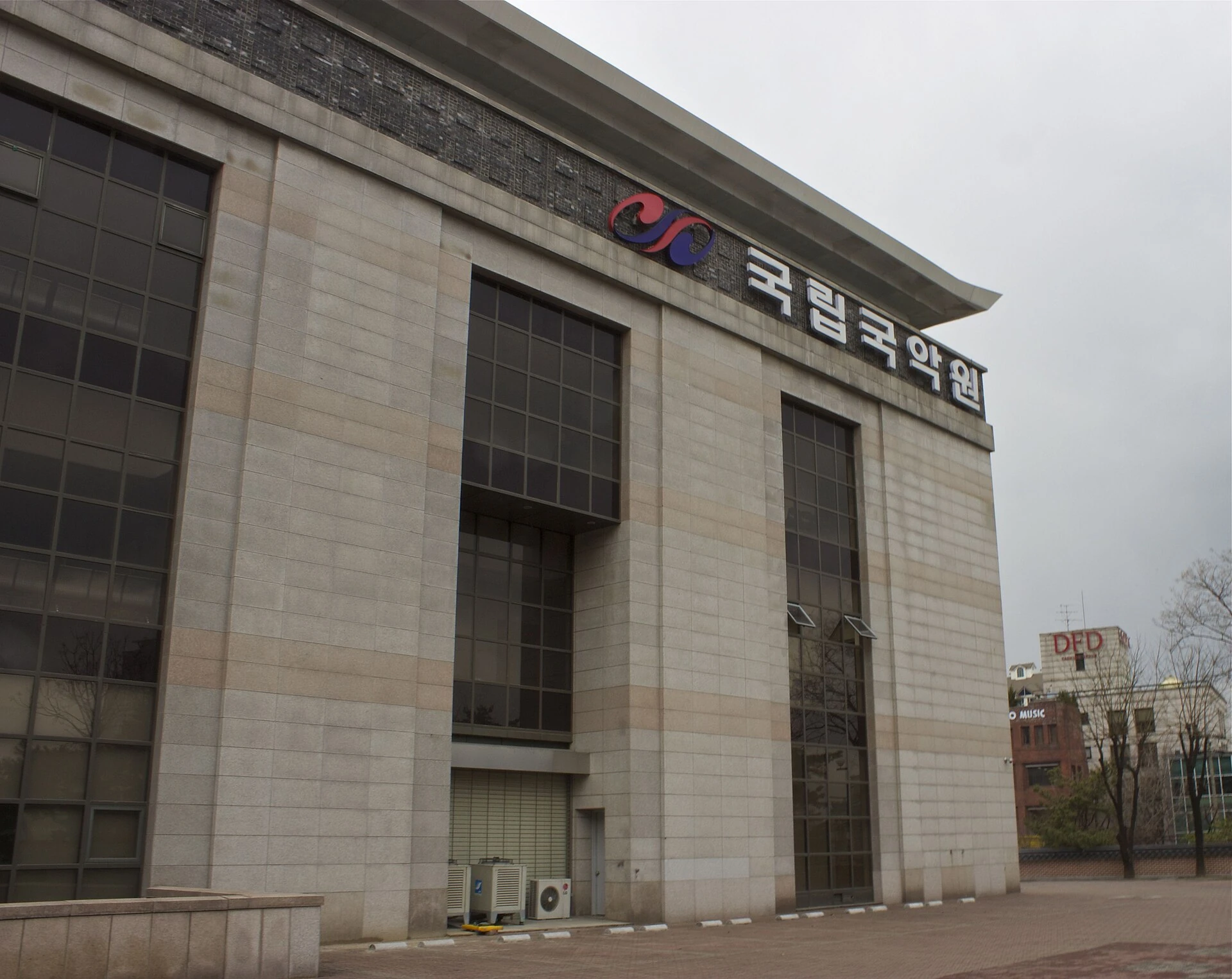
A first visit to the National Gugak Center begins with the program, not simply the institution’s name. Court music, folk performance, dance and contemporary work can create very different listening experiences. The museum can help you recognize instruments and context, but a museum reservation is not a ticket to a concert.
Choose one performance for the sound and format you want to encounter. Then check its actual hall, date, age rule and ticket channel. A series name preserved in search results can describe a program from many years ago, so the year on the detail page matters as much as the title.
Start with what you want to hear
The Center’s English site distinguishes its Court Music Orchestra, Folk Music Group, Dance Company and Contemporary Gugak Orchestra. Use that variety as an invitation to choose, rather than assuming every event is a short overview designed for tourists.
Read the actual program and ask whether it is mainly instrumental, vocal, dance-led or a mixed selection. Consider the duration and the amount of spoken commentary. A concert can be rewarding without understanding every word, but a text-heavy theatrical work poses a different language question from an instrumental set.
For a first mixed introduction, look at the current Saturday Gugak Concert listing. For a particular interest, choose the named ensemble or work instead. The most useful ticket is the one whose program you want to give your attention to, not the cheapest available item under the word “traditional.”
| Listing type | Useful reason to choose it | Check before paying |
|---|---|---|
| Mixed concert | You want to encounter several forms in one visit | The exact week’s repertoire, hall and age requirement |
| Named ensemble or substantial work | You want to listen more deeply to one musical subject | Duration, vocal/text content and any interpretation provided |
| Outdoor performance | The open-air format is part of the appeal | Season, weather decision, seating and its separate ticket channel |
| Gugak Museum tour | You want instruments and historical context | It is a museum program, not a concert ticket |
A verified 2026 concert example
The 2026 Saturday Gugak Concert detail page lists the series in Umyeon-dang at 15:00, running 80 minutes, with a published 2026 period through December 26. It displays A seats at KRW 30,000 and B seats at KRW 20,000. These identify the 2026 series checked for this guide; they do not establish a 2027 schedule or seats available on your intended Saturday.
The page specifies an age condition of 7 and over, defined for that series by birth on or before December 31, 2019. Use that exact year-specific condition when deciding about a child. Do not apply an old Korean age label or the age policy of another family program to this concert.
Its booking notice also warns that the selector can automatically move to the next performance date on a sold-out or same-day page. Before confirming a purchase, read the selected date again. A functioning payment screen does not prove that the calendar still contains the date you originally searched.
The hall name belongs on the journey note
The Center is at 2364 Nambusunhwan-ro, Seocho-gu. Its site layout distinguishes Yeak-dang, Umyeon-dang, Pungnyu Sarangbang and Yeonhui Madang among the facilities. Save the hall on the confirmation; the first building you reach within the complex may not be the auditorium on your ticket.
The official transport page describes connections including Nambu Bus Terminal Station Exit 5 with Seocho 22, and Bangbae Station Exit 1 with local-bus options. Use the actual journey planner for the departure you need and identify the final stop and walking connection. A station arrival is not the same as arrival at the auditorium.
Allow time to locate the ticket desk, use the toilet and find your seat. If step-free access, a wheelchair place or a particular seating arrangement matters, contact the Center before purchasing. The availability of a hall map should not be treated as confirmation that every seat category suits the same mobility needs.
Book through the channel that the specific event names
The Center’s booking guide ordinarily closes internet and telephone advance booking at 18:00 on the day before the performance. It says some overseas-issued cards can be restricted. Telephone booking can involve a virtual-account transfer rather than card payment, so a telephone number alone is not proof that a foreign visitor can complete that alternative.
Use the event page’s actual instructions. For example, the 2026 outdoor Yeonhui program uses an external authorized ticket channel rather than the Center’s ordinary booking system. The general guide and a specific program can therefore give different practical routes; the program’s stated seller should settle the transaction.
On the reservation, verify the title, date, start, hall, seat, price category and accepted status. Keep the reservation number or confirmation and the required proof for any discount. The operator says unsupported discount claims can require paying the difference at pickup.
Ordinary ticket collection begins one hour before the performance at the relevant hall. After the advance-booking cutoff, remaining tickets may be sold on site, but a possible same-day sale is not a reservation. If the trip depends on entry, resolve the ticket before organizing the rest of the day around it.
Use the museum as preparation, with its own hours
The Gugak Museum information lists free individual admission,10:00–18:00, last entry 17:30, and Monday/January 1 closures. Its collection includes instruments, scores, music-related texts and costume material, with an emphasis on listening as well as looking. Individual visitors can ordinarily enter without an advance museum reservation; group arrangements differ.
Choose a small number of instruments or displays that connect with the concert. Look for how sound is produced, how an ensemble is organized and what the interpretation says about the musical setting. Listening to one example before the performance can give you a reference point without trying to master the whole tradition.
The 2026 English museum-tour page explicitly says it is a museum program, not a performance. It lists Saturday 14:00 sessions within the 2026 program and an application route. A museum tour confirmation does not include the 15:00 concert. If you want both, secure them separately and leave the movement and ticket-pickup time between them.
The museum also notes access limits around some Wednesday and Saturday programs. If a particular room or guided session is the purpose, confirm it directly instead of assuming ordinary building hours establish access to every activity.
Listen with a few useful questions
You do not need to recognize every instrument to follow an unfamiliar performance. Begin by noticing what holds the group together: a rhythmic pattern, a melodic lead, a shared change of pace or the relationship between movement and sound. Listen for a repeated phrase returning in a different register or texture.
When vocals or narrative are central, read the program summary first and ask what language support is actually provided. Do not assume an English website guarantees projected English text for every event. A synopsis can orient you even when the performance itself remains in Korean.
Follow the hall’s rules on silence, late entry, photography and recording. The booking guide prohibits recording in the auditorium and restricts movement after the performance begins. Give unfamiliar pacing room to work instead of using a phone to fill a quiet passage.
Make dinner and the return fit the performance
Eat before a long evening program or select a realistic meal afterward, with the actual kitchen and transport hours in mind. Keep enough margin that finishing dinner does not mean arriving at the building as the music begins. The food-ordering guide can reduce the transaction time without turning the meal into a rush.
For a cultural evening with a free-admission option instead, the free cultural-experience guide explains different choices. Keep those as alternatives to a missed booking, not additional commitments around a concert you want to hear attentively.