
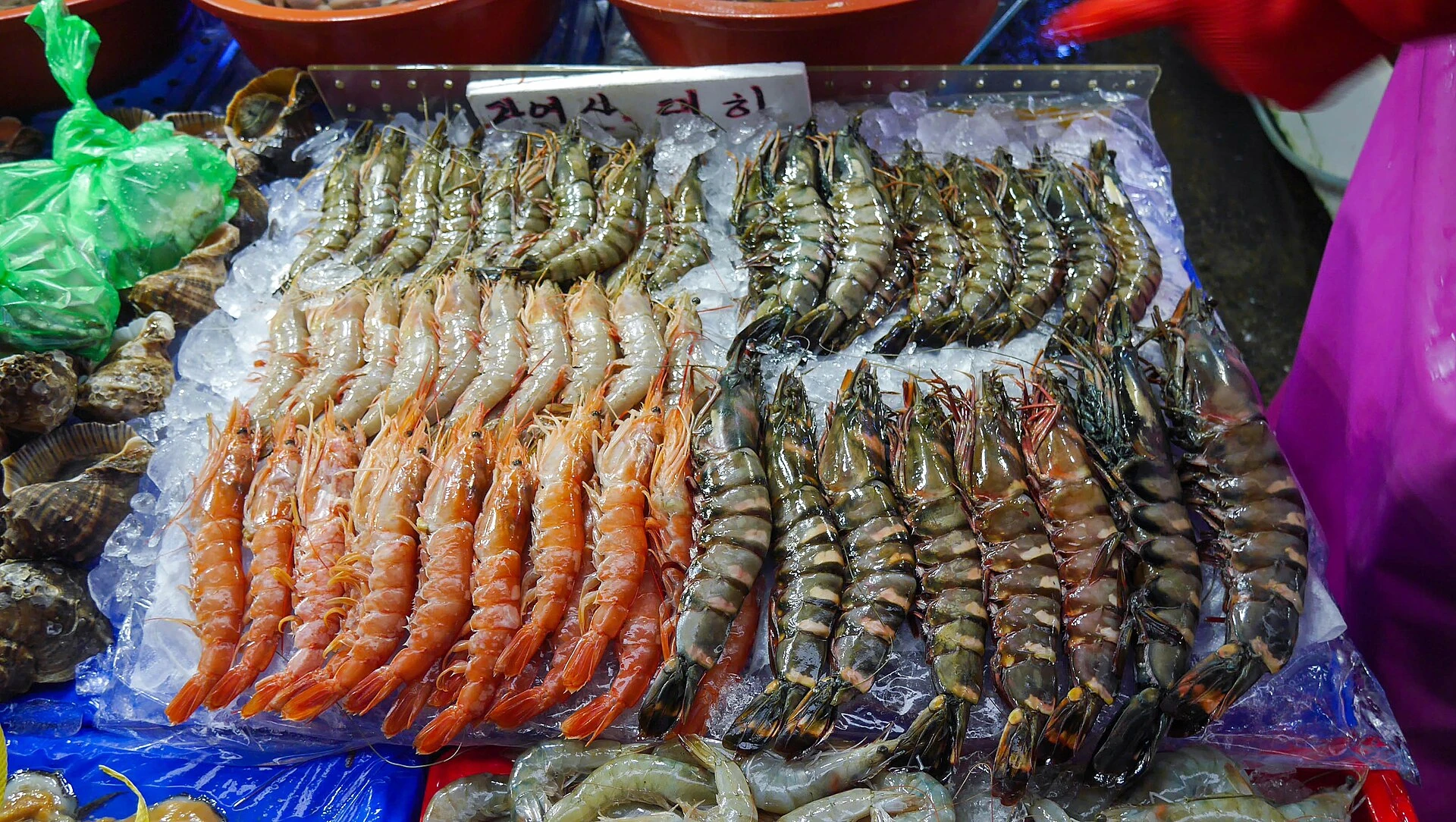
A meal at Noryangjin is easiest to understand as two purchases: seafood from a seller and a dining or preparation service from a restaurant. The fish price can be only the first part of the bill. Establish both arrangements before the seafood is selected and prepared, especially when buying something sold by weight.
Official market and tourism information checked October 17, 2026. This is a buying-and-dining guide based on primary sources, not a recent market visit, a stall recommendation or a live seafood price list. Species, size, origin, condition and the selected cooking method can all change the quotation.
Know which part of the market you need
The market is at 674 Nodeul-ro, Dongjak-gu, Seoul. The market operator’s English site provides official market information, while the KTO market listing distinguishes seafood sales areas from restaurants and other facilities. A wholesale-market opening reference does not establish the service hours of the particular restaurant where you want to eat.
Save the market name 노량진수산시장 and the actual entrance or meeting point. If someone in the group will join later, also save the seller’s and restaurant’s identifying details. “The fish market” is too broad a meeting instruction once different people are choosing stalls or moving between floors.
Understand the two-bill arrangement
Visit Seoul’s market explanation describes paying the fishmonger for seafood and the restaurant for accompanying dishes, vegetables or sauces. Treat any additional preparation as a separate quotation until its terms are clear. There is no verified universal table or cooking charge in this article.
| Part of the transaction | What to identify | Question that prevents a misunderstanding |
|---|---|---|
| Seafood | Species, quantity, size and quoted unit | Is that amount per kilogram, per animal, per piece or for the entire selection? |
| Weight-based purchase | The scale reading and agreed unit price | Which weight is being charged and what does the total include? |
| Preparation | The actual method and the restaurant providing it | Is steaming, grilling, cutting or another preparation included or separately charged? |
| Dining arrangement | People seated and accompanying items | Is a per-person charge applied, and which dishes or sauces does it include? |
| Extras | Rice, soup, drinks and optional dishes | Which items add to the first quotation? |
A seller naming a restaurant does not by itself establish that restaurant’s current total. Ask for the seafood charge and the proposed dining charge in an understandable form before committing. If that cannot be done, an ordinary restaurant with a clear menu may be a better meal for your group.
Choose the food before comparing the price
Decide whether you want a cooked seafood meal, sliced raw fish or simply to browse the market. Those are different visits. A traveler who wants cooked fish does not need to add raw dishes because they appear in market photographs. A group can also enjoy looking at the sales areas and then eat elsewhere.
For a weight-based item such as a crab, identify the exact selection and the quoted unit. For a mixed platter, ask what is included rather than assuming the picture or an English word describes the complete assortment. The name, quantity and method are the basis for comparing quotations; a lower number attached to a different size or preparation is not a like-for-like saving.
Dietary needs belong in this choice. Seafood species, shellfish, sauces and shared preparation may matter independently. If anyone has a serious allergy and the business cannot answer the relevant ingredient and handling questions, use another provider. This guide does not certify market seafood as suitable for any medical condition.
Read the scale and retain the arithmetic
For a straightforward weight quotation, the starting calculation is the agreed chargeable weight multiplied by the agreed price per unit. Ask to see the unit and total together. Do not convert a per-kilogram number into a whole-item price without checking the actual weight.
A useful written record has five fields: the selected item, the unit, the quantity or weight, the seafood total and any agreed preparation inclusion. Ask for a receipt or another clear seller record. Keep the restaurant record separately if the dining service is a different payment.
No illustrative seafood prices are supplied here because an invented “typical crab price” can become a misleading bargaining benchmark. The operator’s market-price information can provide context for a species, but a wholesale or market reference is not automatically a binding retail quotation for the exact item, service and date you select.
Confirm cooking and seating before moving upstairs
- Agree on the seafood selection and total.
- Identify the restaurant or service that will prepare or serve it.
- Confirm the preparation method and any separate charge.
- State the actual number of diners and ask about a per-person dining arrangement.
- Check whether rice, soup, drinks or other additions are included.
- Only then proceed with the meal, keeping both seller and restaurant details.
This order matters because a meal becomes harder to compare once an item has been cut or cooked. Do not assume that being escorted to a dining room makes every remaining charge part of the first price. If someone in the group is still negotiating a different item, coordinate before preparations begin.
Useful Korean questions for a clear quotation
| Korean | Meaning |
|---|---|
| 킬로그램당 가격인가요? | Is that the price per kilogram? |
| 이거 전체 가격이 얼마예요? | What is the price for this whole selection? |
| 조리비가 따로 있나요? | Is there a separate cooking charge? |
| 상차림 비용은 얼마인가요? | What is the table-setting/dining charge? |
| 포함된 것과 추가 비용을 알려 주세요. | Please explain what is included and what costs extra. |
| 영수증 주세요. | Please give me a receipt. |
상차림 describes the dining setup or accompanying spread in this context; its scope is determined by the restaurant, not by the translation alone. Ask what the quoted charge includes. A translated word is less useful than a visible total and a shared understanding of the items.
When a prepared restaurant meal is the better choice
A small group with limited time, a strict budget or a strong preference for one cooked dish may find an ordinary set-menu restaurant easier to compare. The market experience is attractive when choosing seafood and seeing the trading environment are part of the outing. It is not guaranteed to be the cheapest way to eat fish in Seoul.
Keep the group size in the comparison. Buying a large item for one person can leave more food than intended, while a shared seafood selection may fit several people. Decide what you actually want to eat before increasing the order to satisfy a photograph or a seller’s suggestion.
Finish with two records and a manageable return
Check the seafood payment and dining payment separately, then compare them with the terms you agreed. If a line is unclear, show the item and ask while the relevant seller or restaurant can explain it. Preserve the receipt rather than relying on a total remembered after leaving.
Do not turn leftover seafood into an unplanned storage problem. Ask the provider about the particular food and packaging if you intend to take it away; do not assume a room-temperature journey is acceptable. For a different Seoul market meal with ready-made dishes, our Gwangjang and Tongin guide explains those distinct ordering systems. For general ingredient communication, use the food-ordering guide.