
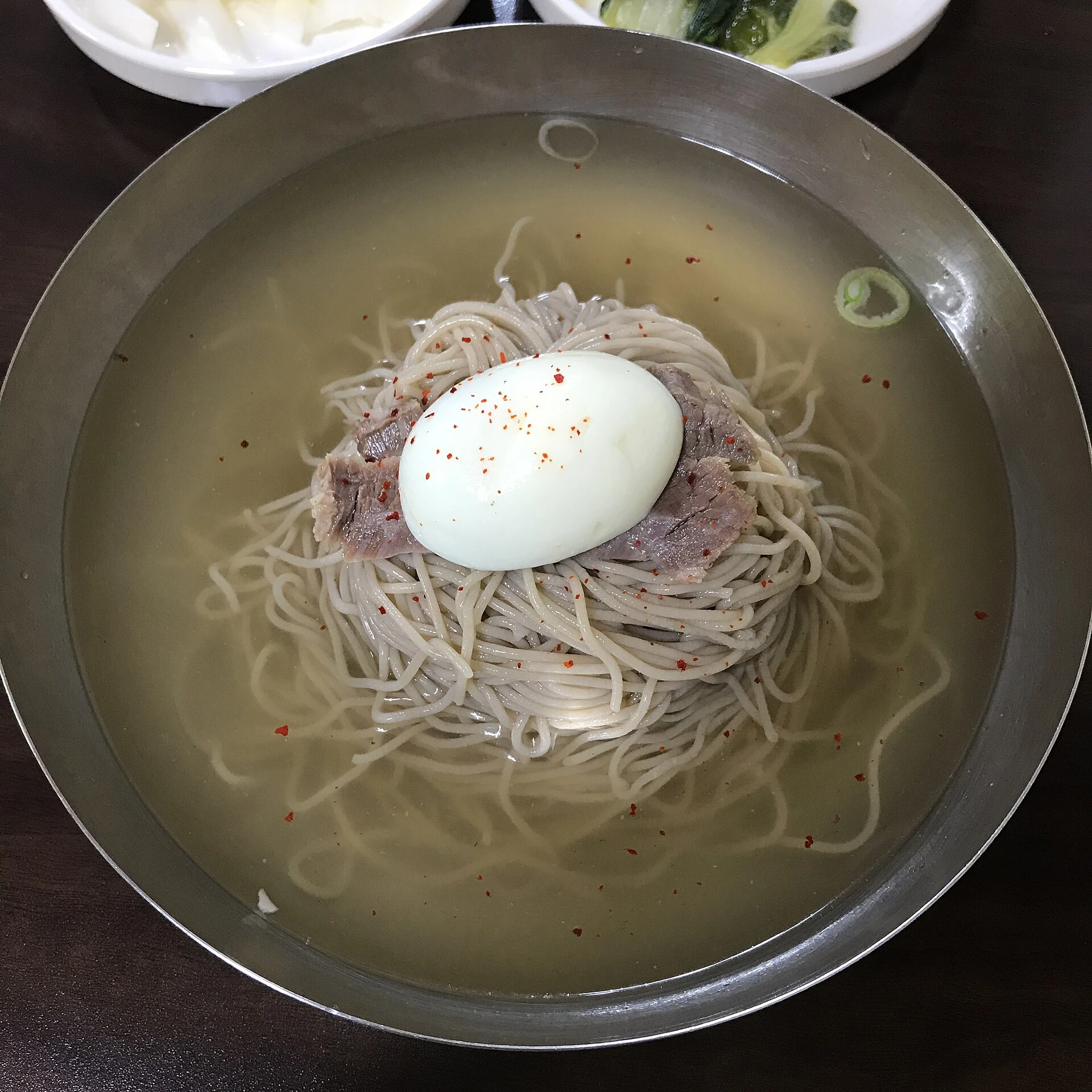
The fastest way to choose Korean noodles is to decide three things: hot or cold, broth or mixed sauce, and which ingredients you need to check. A bowl described as “buckwheat noodles” can still contain a flour blend. A pale broth can be based on meat or seafood. The noodle name is a starting point, not the complete recipe.
Food references checked October 17, 2026. This comparison uses Korea Tourism Organization dish descriptions. It explains common preparations and useful questions; individual restaurants control their recipes, seasonal availability and current menu. No tasting or ingredient certification is implied.
Choose by temperature and texture
| Dish | Usual format | Choose it for | Ask about |
|---|---|---|---|
| 칼국수 · Kalguksu | Knife-cut noodles in hot soup | A warm bowl with a substantial noodle texture | The broth, shellfish or meat, and wheat ingredients |
| 잔치국수 · Janchi guksu | Thin noodles in warm broth with toppings | A simpler broth-and-noodle meal | Stock and the added seasoning sauce |
| 물냉면 · Mul naengmyeon | Chewy noodles in chilled broth | A cold, broth-led meal | Noodle blend, stock, toppings and mustard/vinegar |
| 비빔냉면 · Bibim naengmyeon | Cold noodles mixed with a red seasoning | A spicy, sauce-led alternative | Sauce heat, noodle ingredients, egg and meat toppings |
| 막국수 · Makguksu | Buckwheat-based noodles, served with broth or mixed seasoning | A different buckwheat texture and regional preparation | Which version the menu offers and the flour blend |
| 콩국수 · Kongguksu | Noodles in cold soybean soup | A chilled soybean-based bowl | Soy, noodle ingredients, toppings and seasonal service |
KTO’s noodle comparison distinguishes hot janchi guksu and noodle soups from chilled naengmyeon and makguksu. Use the table to narrow the choice, then read the actual menu name. A restaurant may sell only one version or use a regional variation.
Kalguksu: the name describes the noodle-making method
The word 칼 means knife. KTO’s kalguksu explanation emphasizes that the name identifies knife-cut noodles rather than one fixed ingredient. A clam-based bowl and another restaurant’s meat-based bowl can both be kalguksu. Choosing the dish therefore does not resolve the broth question.
Read any word before 칼국수. 바지락 points toward clam; 닭 points toward chicken; 들깨 indicates perilla seed. These words help identify the offered style, but a visible garnish is not the entire ingredient list. Ask about the base as well as the main topping if an ingredient must be excluded.
For a first warm-noodle meal, compare the bowl description with the side dishes you might add. 만두 means dumplings, not an automatically included part of the noodle order. A restaurant’s noodle-and-dumpling set may have a different portion and price from buying both separately. Confirm the actual number of bowls and dumpling orders before paying.
Janchi guksu: thin noodles, with the seasoning still under your control
Janchi guksu usually gives a different eating texture from knife-cut noodles: thinner strands in broth with toppings. KTO explains its association with celebratory banquets. That cultural background does not mean a restaurant bowl is an elaborate feast or a fixed ceremonial recipe.
If seasoning is supplied separately, taste the broth before adding it and ask which bowl the sauce belongs to. A small red or soy-based condiment can change saltiness and heat quickly. Do not assume that choosing a pale soup means every supplied sauce is mild. For a dietary restriction, the broth itself needs checking before condiments become the main concern.
Mul and bibim naengmyeon are different orders
물냉면 is the chilled-broth choice. 비빔냉면 is the mixed-seasoning choice. The common 냉면 ending tells you they belong to the cold-noodle family; it does not make them interchangeable at the counter. Point to the full line when ordering, especially if the menu places both versions beside the same photograph.
KTO’s bibim naengmyeon entry describes cold noodles with a sweet-sour red chili seasoning and examples of meat, cucumber and egg toppings. Those are representative ingredients, not a guarantee of the recipe at every shop. If the menu is known for very spicy noodles, ask whether the sauce can be adjusted before ordering rather than expecting a mild version after it has been mixed.
With mul naengmyeon, try the supplied broth before adding vinegar or mustard. The intended flavor can be subtle. Add condiments gradually if you want them, and keep the bottle shared between diners clean. A table condiment is optional seasoning, not evidence that the original bowl was prepared incorrectly.
Makguksu: “buckwheat” does not certify a wheat-free bowl
KTO describes makguksu noodles as potentially blending buckwheat with wheat flour or starch. That is a useful warning against judging ingredients from the English dish name alone. More buckwheat and more wheat can produce different textures, and the menu may offer broth, spicy mixed or other preparations.
Ask 물막국수인가요, 비빔막국수인가요?, “Is this the broth version or the mixed version?” when the listing is unclear. If wheat or buckwheat is an allergy concern, ask about the full noodle product and shared preparation. Choosing the opposite version changes the serving format; it does not remove the flour issue.
Kongguksu: a soybean soup with its own season
The official kongguksu description explains boiled noodles served in a thick soybean soup, commonly eaten in summer. This is a different flavor and texture from a cold beef-broth noodle. Check whether the restaurant is actually serving it on your date; a summer photograph does not establish a winter menu.
Soy is central to this dish. The noodles, toppings and accompanying kimchi require their own ingredient checks, especially for allergies or a strict vegan diet. A white soup is not necessarily dairy-based, but it is also not proof that no milk, nut or other restricted ingredient has been used by that particular business.
Two sample decisions at a real menu
You want a warm, not-too-spicy lunch. Begin with a clearly described kalguksu or janchi guksu. Check the stock and whether a spicy seasoning is already mixed in. Order the bowl before deciding on an additional shared dumpling dish. This is a decision sequence, not a promise that every restaurant’s soup is mild.
You want cold noodles but dislike a strong red sauce. Compare mul naengmyeon with the actual kongguksu offering. The former is a chilled-broth meal with its own stock and condiments; the latter is soybean-based. Choose using ingredients and texture rather than assuming every cold dish has the same sour or spicy profile.
Useful questions, with their limits
- 차가운 음식인가요? — Is this served cold?
- 국물에 뭐가 들어가나요? — What goes into the broth?
- 양념을 따로 받을 수 있나요? — Can I have the seasoning separately?
- 면에 밀가루가 들어가나요? — Do the noodles contain wheat flour?
These questions begin the conversation; they do not certify a kitchen’s allergen controls. Explain the actual restriction and choose another meal if the answer remains uncertain. For the wider stock-and-seasoning issue, see our Korean ingredient guide. For ordering through staff or a kiosk, use the food-ordering workflow.
One correctly chosen bowl is a complete noodle experience. You do not need a second restaurant to prove you tried every style. Keep the comparison useful: temperature, broth, ingredients and the actual portion you want today.