
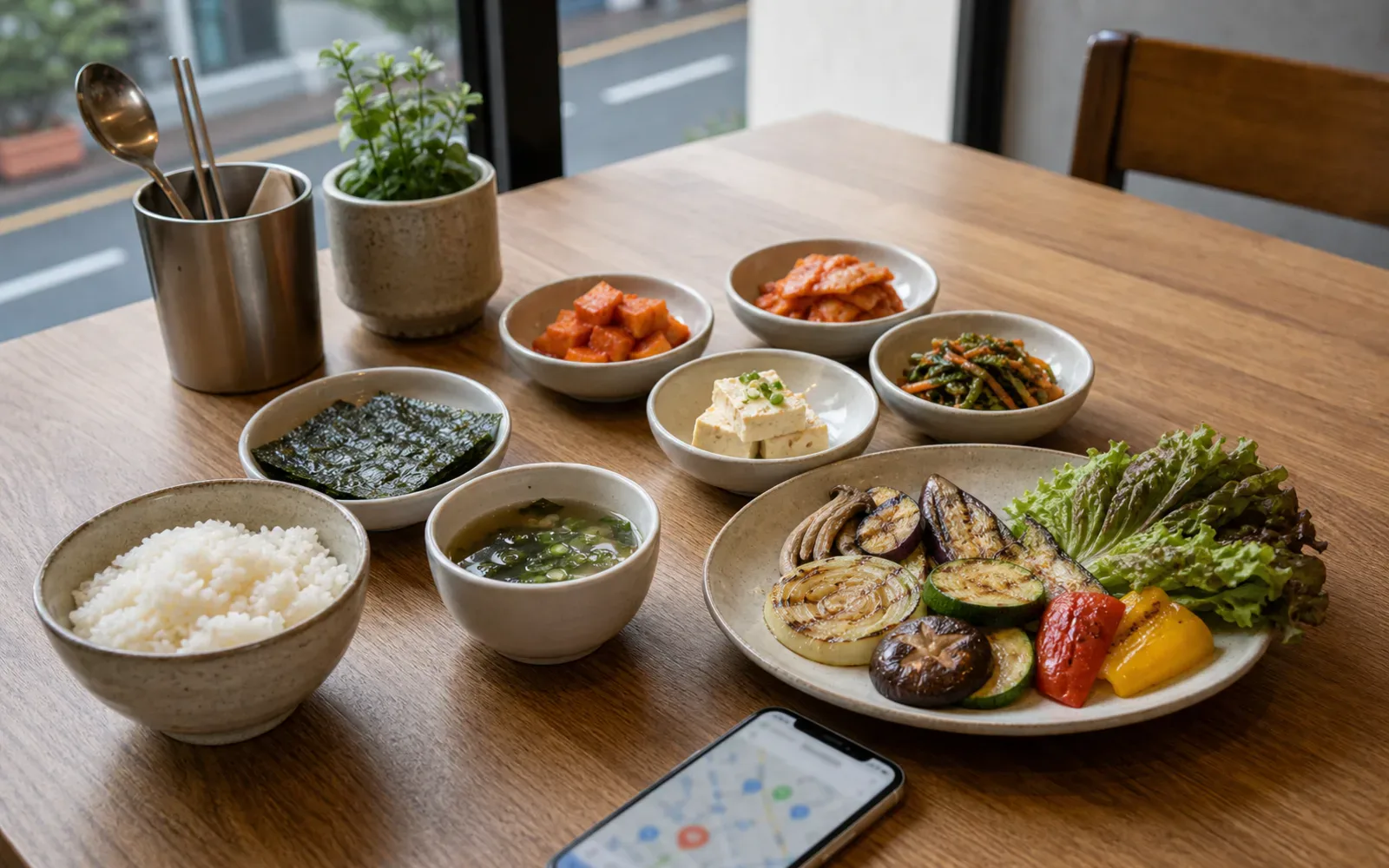
KTO categories checked July 27, 2026. “Muslim-friendly” is not the same as halal-certified. Korea Tourism Organization uses four separate restaurant categories, and two of them explicitly may sell alcohol. Read the category before the restaurant name.
A restaurant record you can evaluate before traveling
Create one record for each serious candidate: exact branch, KTO category, current operator contact, the dishes you intend to order and the evidence relevant to your own standard. An address alone is not enough, and a general Muslim-friendly label should not be silently promoted to halal certification.
For a certified entry, examine the actual current certificate’s location and scope. For a self-certified entry, understand what the operator is claiming and whether that matches your requirement. For a Muslim-friendly entry, identify the particular dishes rather than assuming the whole menu is covered. For a pork-free entry, do not infer meat source or kitchen handling from the absence of pork.
| Evidence | What it can establish | What should not be inferred |
|---|---|---|
| Current certificate | A defined certification scope and location | Automatic coverage of another branch |
| KTO category | The directory’s published classification | A stricter category than the one displayed |
| Operator’s written response | The dish and process described in that response | A permanent guarantee after ownership or recipe changes |
| Ingredient label | The current packaged product’s stated contents | An assurance about a different recipe or preparation surface |
This makes the screening process explicit. The category is useful evidence, but the final restaurant choice remains tied to the actual branch and your requirements.
A clear message instead of one ambiguous word
Write the visit date, branch and party size first. Then say what you require: current certification if applicable, no pork-derived ingredients, your position on cooking alcohol, and whether separate equipment matters. Ask which dishes the restaurant currently offers under those conditions.
Keep the answer with the planned menu and booking details. If it describes only one dish, do not extend it to a buffet or another branch. If staff cannot answer a question important to your standard, choose the better-documented alternative before crossing the city.
This is a communication structure, not a completed verification by KoriPicks. It avoids asking a rushed halal question that a restaurant may interpret more narrowly than you intend.
Two common mistaken shortcuts
The neighborhood shortcut: A restaurant near a mosque or in Itaewon does not acquire certification from the address. The location can make the meal convenient, but the category, dish and current evidence decide suitability.
The vegetarian shortcut: A meal without meat can still raise questions about seasoning, cooking alcohol or equipment under a particular halal standard. Apply the relevant requirements separately rather than treating vegetarian and halal as identical labels.
These distinctions let you use a wider range of information without overstating what it proves. A restaurant can be useful to investigate while still not meeting the standard you need.
A meal plan with an actual alternative
Choose the primary venue near the day’s main activity and a second option whose ingredients or current evidence you understand. Check both opening arrangements before the day starts. An uncertain packaged meal or a distant restaurant with an old directory record is not a dependable backup merely because it appears in a search result.
If the first venue is closed, use the alternative rather than changing the required standard under time pressure. If the meal requires a reservation, protect it in the day’s schedule instead of adding several attractions immediately before entry.
Keep the current branch evidence with the recommendation
When saving or sharing a restaurant note, include the category, branch, source and review date. Distinguish an operator’s claim from a certificate and from your own personal experience. This publication does not claim a meal or on-site kitchen inspection that did not occur.
The useful result is a documented selection process: the label is understood, the dish is identified, the branch is current and unanswered questions remain visible. A long list of restaurant names without those distinctions would provide less reliable help.
The four official categories
| KTO label | What the tourism authority says | What you still check |
|---|---|---|
| Halal Certified | Certified by an accredited halal agency such as KMF | Current certificate scope and expiry |
| Self-certified | Muslim restaurant owner certifies all food as halal | Your own required standard and current ingredients |
| Muslim Friendly | Some halal dishes are provided; alcohol may be sold | Exact dish, kitchen separation and alcohol exposure |
| Pork Free | No pork menu, but restaurant is not halal; alcohol may be sold | Meat source, broth, mirin and shared equipment |
The KTO page also warns that hotel buffets categorized as Muslim-friendly may serve pork. The category is a screening tool, not a substitute for asking the venue.
Use the official list, then verify the restaurant
Start with VisitKorea’s Muslim-friendly restaurant search or current PDF. Confirm the address and phone on a second current official surface because restaurants move and change ownership. Ask the restaurant which dishes meet the listed category and whether its certificate or meat supplier has changed.
A photo of an old certificate is not enough. Check the certification body, restaurant name, covered location and validity period. If you follow a stricter standard than the directory category, say so directly.
Ingredients that need a specific question
- Meat stock or bone broth in soups and stews.
- Pork, lard or gelatin in sauces and processed products.
- Cooking alcohol, mirin or alcohol-based seasoning.
- Kimchi or side dishes made with seafood products.
- Shared grills, fryers, knives and serving tongs.
Useful questions from the official FAQ
KTO’s Muslim-friendly FAQ provides Korean wording for checking pork-based ingredients and alcohol. Save the official page offline so staff can read the full sentence rather than a phonetic approximation. Also show your needs in writing; a rushed verbal “halal?” can be interpreted as simply “no pork.”
Build a low-risk meal plan
- Choose a Halal Certified or Self-certified option near the day’s main area when possible.
- Call or message to confirm current opening hours and category.
- Save one packaged-food or vegetarian fallback whose ingredients you can read.
- Ask about the exact dish and shared equipment before ordering.
- Recheck at buffets; separate labels do not guarantee a separate kitchen.
Areas are not certifications
Itaewon has a concentration of international dining and a mosque, but an Itaewon address does not make a restaurant halal. The same applies to tourist districts and airport branches. Evaluate the restaurant, certificate and dish—not the neighborhood reputation.
Vegetarian food is a fallback, not proof of halal handling
A meat-free dish may contain cooking alcohol, fish products or shared-equipment contact. If a vegetarian option helps your plan, use our vegetarian ingredient checklist, then apply your halal requirements separately. Standard Korean barbecue presents additional shared-grill issues described in the first-timer guide.
Compare a certificate, a directory label and a menu claim
These answer different questions. A certificate establishes a defined certification scope. A directory label summarizes the tourism authority’s category. A menu claim applies to a particular dish as described by the business. Do not merge all three into a single assurance that the entire kitchen meets your requirements.
For a certificate, match the restaurant name and branch to your destination and check validity. For a directory, open the actual category rather than interpreting a general Muslim-friendly headline as certification. For a dish, ask about the ingredients, meat supply and cooking process that matter to your standard.
A practical reservation message
State the intended date, party size and branch first. Then describe your requirement clearly: whether you require current halal certification, whether alcohol in cooking is unacceptable, and whether shared equipment matters. Ask which menu items the restaurant can currently provide under those conditions. Keep the response with the booking details.
This is a communication framework, not a claim that KoriPicks has verified the business. If the response is vague, choose a better-documented option before traveling across Seoul. An unanswered message is not confirmation.
When a buffet label is insufficient
A separately labeled buffet dish can sit beside food prepared under different conditions. Serving utensils may be moved by other guests, and a label does not explain every ingredient or preparation surface. Ask the venue how the labeled option is handled if separation is important.
Likewise, an airport or hotel branch should be checked in its own right. A main restaurant’s certificate or a previous owner’s assurance does not automatically describe another location. Build the meal plan around the current branch evidence and keep an alternative that meets your requirements without relying on assumptions about the neighborhood.
Official resources
- VisitKorea: Muslim-friendly restaurant categories and search
- VisitKorea: Muslim-friendly dining FAQ and Korean questions
- VisitKorea: Muslim-friendly restaurant guide (PDF)
Religious-diet boundary: KoriPicks explains KTO’s published labels but does not issue halal certification. Contact the restaurant and relevant certification authority when strict compliance is required.